
Key Takeaways
- Pool installation services Pennsylvania include design, permits, excavation, plumbing, electrical, and finishing.
- A saltwater pool vs chlorine pool decision affects equipment, plumbing, and equipment placement during construction.
- Saltwater systems require a chlorine generator and specific bonding to prevent corrosion.
- Chlorine pools use simpler equipment but demand more manual chemical handling and storage.
- Licensed PA pool builders can advise on which system fits your soil, climate, and usage patterns.
- Financing options and installation timelines can vary slightly depending on the system you choose.
- Both systems still use chlorine to sanitize water — the difference is how that chlorine is produced.
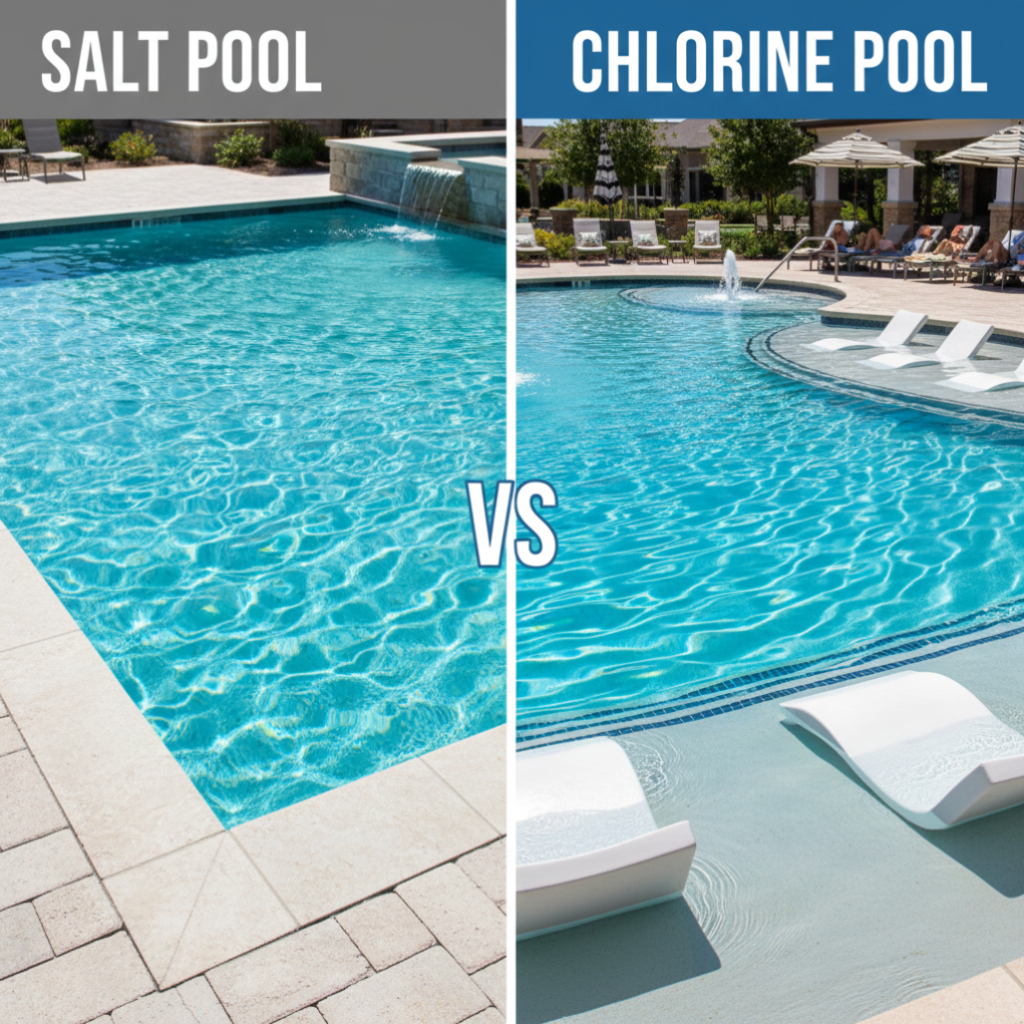
Homeowners across Pennsylvania planning an in-ground pool eventually face one major decision: saltwater pool vs chlorine pool. It’s a question that sounds simple on the surface but actually shapes how your pool is built, not just how it’s maintained afterward.
The equipment, electrical work, plumbing layout, and even the materials used around your pool’s edges can differ depending on which system you choose. If you’re comparing local pool contractors in PA, understanding these installation differences will help you ask smarter questions and avoid common installation mistakes mid-project.
This guide walks through what actually changes at the construction stage, so you can make a decision that fits your home, budget, and long-term maintenance preferences.
How Saltwater and Chlorine Pools Actually Work
Before comparing installation steps, it helps to clear up a common misconception: saltwater pools are not chlorine-free. Both systems sanitize water using chlorine — the difference is in how that chlorine gets there.
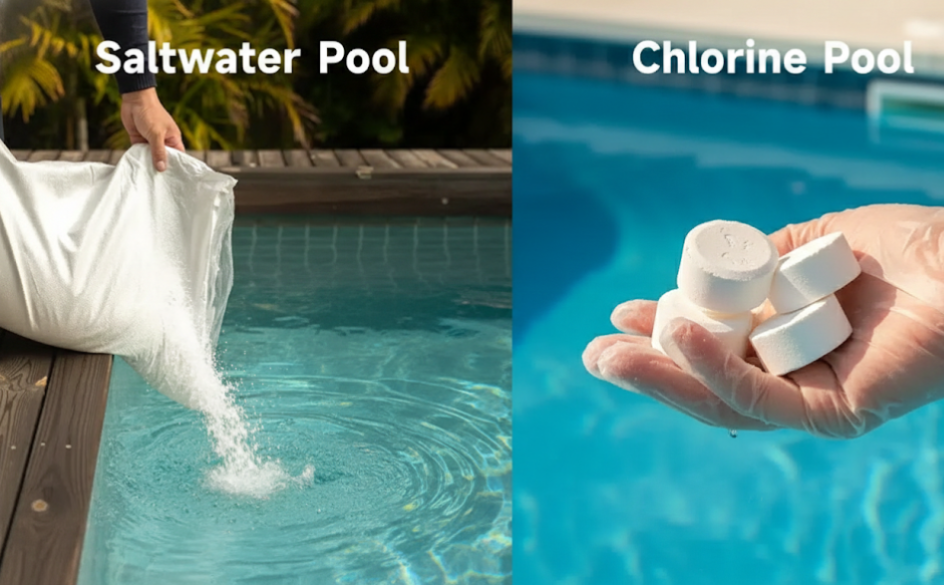
Chlorine pools rely on chemicals added directly to the water, either as liquid, tablets, or granular chlorine, typically fed through a chlorinator or added manually.
Saltwater pools use a salt chlorine generator (sometimes called a salt cell) that converts dissolved salt into chlorine through electrolysis, continuously producing sanitizer as water passes through the cell. To understand the broader implications of this technology, it helps to review the differences between salt and chlorine systems.
This distinction matters because it changes the equipment your pool builder installs, the electrical requirements, and how the plumbing is configured.
Installation Differences: Step-by-Step
Here’s a general sequence of how installation differs once you’ve chosen a system, based on standard in-ground pool construction practices used by residential pool contractors PA.
Excavation and structural work — Identical for both systems. Pool shell materials, size, and shape don’t change based on sanitation method.
Plumbing rough-in — Saltwater systems require plumbing sized and positioned to accommodate the salt cell inline, typically after the heater and filter. Chlorine systems have more flexibility here since no cell placement is needed.
Electrical work — Saltwater systems need a dedicated electrical connection for the salt chlorine generator control box, which must be properly bonded and grounded to prevent stray current corrosion. This is why working with licensed Pennsylvania pool builders is critical for safety compliance.
Equipment pad layout — A saltwater pool builder will typically install the salt cell between the filter and heater, requiring slightly more space and specific plumbing unions for future cell replacement.
Metal component selection — Saltwater systems produce a mild salt environment that can accelerate corrosion on unprotected metal, so builders often use corrosion-resistant pool coping materials, handrails, and fixtures rated for saltwater exposure.
Startup and balancing — Chlorine pools are balanced using traditional test kits and manual dosing. Saltwater pools require an initial salt level test and generator calibration before the system is fully operational.
Homeowner walkthrough — Builders explain different maintenance routines: manual chemical additions for chlorine pools versus salt cell monitoring and periodic cell cleaning for saltwater pools.
Saltwater vs Chlorine Pool: Installation Comparison Table
| Factor | Saltwater Pool | Chlorine Pool |
|---|---|---|
| Sanitizing equipment | Salt chlorine generator (salt cell) | Chlorinator or manual dosing |
| Electrical needs | Dedicated circuit for generator control box | Standard pump/filter electrical only |
| Metal fixture requirements | Corrosion-resistant materials recommended | Standard materials typically sufficient |
| Equipment pad space | Slightly larger footprint for salt cell | More compact equipment layout |
| Initial setup complexity | Requires salt level testing and calibration | Requires standard chemical balancing |
| Typical upfront equipment cost | Generally higher due to salt cell | Generally lower |
| Manual chemical handling | Less frequent, salt added periodically | More frequent, chlorine added regularly |
Pros and Cons
| Pros | Cons |
|---|---|
| Softer feel on skin and eyes for many swimmers | Higher upfront equipment costs |
| Less frequent manual chemical additions | Salt cell requires periodic replacement |
| Consistent chlorine production once balanced | Metal fixtures near the pool need corrosion resistance |
| Automated sanitization reduces daily effort | Initial calibration can be complex |
| Stable pH levels reduce chemical adjustments | Salt can affect surrounding landscaping if not managed |
Do’s and Don’ts When Choosing Your System
| DO | DON’T |
|---|---|
| Ask your pool builder how equipment pad space will accommodate your chosen system. | Assume saltwater pools are chemical-free — they still use chlorine. |
| Confirm electrical and bonding requirements are included in your installation quote. | Skip asking about corrosion-resistant fixtures if choosing a saltwater system. |
| Discuss long-term maintenance expectations before committing to a system. | Choose a system based on upfront cost alone without factoring in long-term maintenance. |
| Verify that your builder is licensed and experienced with your preferred system. | Ignore the impact of salt exposure on nearby metal landscaping features. |
| Plan for future salt cell replacement costs in your long-term budget. | Rush the decision without understanding the plumbing differences. |
Conditional Guidance: Which System Fits You?
If you prefer lower daily maintenance and don’t mind a higher upfront investment, a saltwater pool’s automated chlorine generation may suit your lifestyle better.
If you’re working with a tighter construction budget, understanding typical inground pool costs can help you decide if a traditional chlorine pool is the more practical starting point.
If your property has extensive metal landscaping features, railings, or fencing near the pool area, discuss corrosion-resistant options with your builder before choosing saltwater, since salt exposure can affect unprotected metal over time.
If you’re unsure which system fits your household’s usage patterns, ask a licensed pool builder to walk through both options during your design consultation, since local pool construction experts can factor in your specific site conditions.
Case Study:
A Bucks County homeowner planning an in-ground pool for a family of four with young children who swim several times a week. During the design phase, their pool builder outlines both options: a chlorine system with lower upfront costs, or a saltwater system with a higher initial investment but less frequent manual chemical handling.
Given their swim frequency and preference for reduced weekly maintenance, the homeowner selects a saltwater system. Their builder adjusts the equipment pad plumbing to include the salt cell and selects corrosion-resistant coping around the pool’s edge. This hypothetical scenario illustrates how installation decisions ripple outward from a single system choice.
What Industry Sources Say
According to guidance commonly referenced from the Association of Pool & Spa Professionals (APSP, now part of PHTA), proper bonding and grounding are essential for any electrically connected pool equipment, including salt chlorine generators. The CDC guidelines on recreational water illness also notes that all residential pools, regardless of sanitation method, require consistent chlorine levels to control bacteria and pathogens.
Furthermore, adherence to NEC Article 680 safety standards ensures electrical components are installed correctly to prevent hazards. Industry experts generally suggest that equipment selection should be guided by household maintenance preferences rather than upfront cost alone.
Quick Answers – FAQ
Is a saltwater pool actually chlorine-free?
A: No. Saltwater pools use a generator to convert salt into chlorine, so they still sanitize with chlorine — just produced differently than in a traditional chlorine pool.
Does installation take longer for saltwater pools?
A: Not significantly, though additional electrical and plumbing steps for the salt cell may add some time compared to a standard chlorine setup.
Can I convert a chlorine pool to saltwater later?
A: In many cases, yes, though it typically requires adding a salt cell and adjusting plumbing, which is easier to plan during initial construction.
Are saltwater pools more expensive to install?
A: Generally, yes, due to the added cost of the salt chlorine generator and related equipment.
Do saltwater pools require less maintenance overall?
A: They typically require less frequent manual chemical additions, though the salt cell itself still needs periodic maintenance and eventual replacement.
Will salt damage my pool equipment or landscaping?
A: Unprotected metal fixtures can corrode over time from salt exposure, which is why builders often recommend corrosion-resistant materials near saltwater pools.
Which system is better for swimmers with sensitive skin?
A: Many swimmers report that saltwater pools feel gentler on skin and eyes, though individual experiences vary.
Do PA licensed pool builders have experience with both systems?
A: Most licensed pool builders in Pennsylvania are experienced installing both saltwater and chlorine systems and can guide you based on your property and preferences.
Glossary of Terms
Salt Chlorine Generator: A piece of pool equipment that converts dissolved salt into chlorine through electrolysis, continuously sanitizing pool water.
Bonding: An electrical safety practice connecting metal components near a pool to reduce the risk of stray electrical current.
Equipment Pad: The designated area near a pool where filtration, heating, and sanitizing equipment are installed and connected.
Water Balancing: The process of adjusting pool water chemistry, including chlorine, pH, and alkalinity, to safe and comfortable levels.
Conclusion
Deciding between a saltwater pool vs chlorine pool isn’t just a maintenance preference — it directly shapes how your pool is built, from plumbing layout to electrical work to fixture selection. Understanding these installation differences upfront helps you have more informed conversations with any pool builder in Pennsylvania and avoid unexpected costs mid-project.
If you’re planning a new pool and want guidance on which system fits your home and lifestyle, reach out to a licensed local pool builder to discuss your options and get a personalized installation plan.