Small Pool Builders vs Large Pool Companies in PA: Pros & Cons
8 min read Swimming Pools
Key Takeaways
- Pool installation services Pennsylvania include design, permits, excavation, plumbing, electrical, and finishing.
- The debate over small pool builders vs large pool companies mostly centers on communication, crew consistency, and scheduling flexibility.
- Smaller Pennsylvania pool builders often provide more direct owner involvement throughout the build.
- Larger pool companies may offer more standardized processes and broader in-house crews.
- Licensing, insurance, and references matter more than company size when vetting any contractor.
- Financing options and warranty terms can vary significantly between small and large builders.
- Your timeline expectations and communication style should guide which type of builder fits your project.
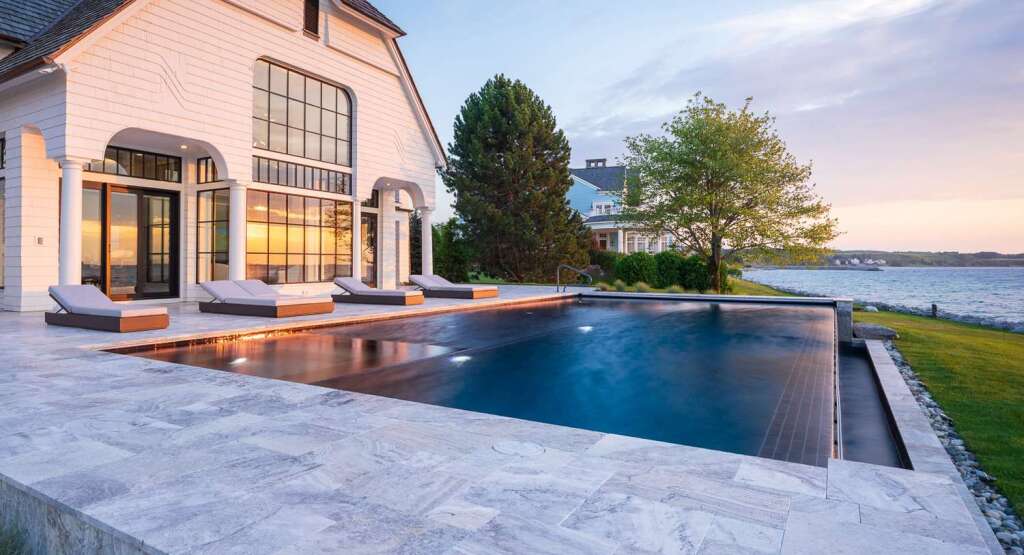
Pennsylvania homeowners planning an in-ground pool eventually run into the same fork in the road: hire a smaller, owner-operated pool builder or go with a larger, multi-crew pool company. The decision around small pool builders vs large pool companies shapes almost everything about the experience — how often you’ll speak with the person actually managing your project, how flexible the schedule can be, and how the company handles issues after the pool is finished.
This guide walks through the practical differences between the two business models as they typically operate across Pennsylvania, from local pool builders in Bucks and Montgomery County to Chester and Delaware County. You’ll find a side-by-side comparison table, a pros-and-cons breakdown, a step-by-step vetting process, and answers to the questions homeowners ask most often before signing a pool contract.
What “Small” and “Large” Actually Mean in the Pool Industry
Before comparing anything, it helps to define the terms. A small pool builder in Pennsylvania is typically an owner-operated or family-run business with one or two active project crews, often specializing in custom gunite pool costs built to order. A large pool company usually runs multiple crews simultaneously, may operate across several counties or states, and often has dedicated departments for sales, design, construction, and service.
Neither structure is inherently better. What matters is which structure aligns with your priorities — direct communication with an owner-builder, or the bench depth of a larger operation that can absorb delays by shifting crews and resources.
Comparison Table: Small Pool Builders vs Large Pool Companies
| Factor | Small Pool Builders | Large Pool Companies |
|---|---|---|
| Owner involvement | Often directly involved in design and build | Involvement typically delegated to project managers |
| Communication | Usually a single point of contact throughout | May route through sales, design, and service teams |
| Scheduling flexibility | Can be more flexible but limited by crew size | More crews available, but scheduling can be less personal |
| Pricing structure | Often lower overhead, potentially lower bids | Overhead may be reflected in pricing, but volume can offset it |
| Warranty and service | Varies; confirm terms directly with the builder | Often has a formal, standardized service department |
| Financing options | May offer fewer in-house financing programs | More likely to have established financing partnerships |
| Custom design flexibility | Frequently strong, hands-on custom design input | May offer design options within standardized packages |
Industry organizations such as the Pool & Hot Tub Alliance and consumer resources like the Better Business Bureau both note that company size alone is not a reliable predictor of quality — licensing, insurance, and verified references matter more.
Pros and Cons
| Pros | Cons |
|---|---|
| Direct access to the owner or lead builder throughout construction | Fewer crews means weather delays or illness can push timelines further out |
| Often more flexible on custom design requests | May have less formalized warranty or service infrastructure |
| Decisions can be made quickly without layers of approval | Financing options can be more limited |
| Personalized attention to detail | Limited capacity to handle multiple large projects simultaneously |
| Potential for lower overhead costs | Less redundancy if key staff are unavailable |
(Note: The above table reflects Small Pool Builders. Below is the breakdown for Large Pool Companies.)
| Pros | Cons |
|---|---|
| Multiple crews can help absorb scheduling setbacks | Communication may pass through several departments before reaching you |
| Often have dedicated service and warranty departments | Design flexibility can be constrained by standardized packages |
| More likely to offer structured financing programs | Project may feel less personal, with less direct owner interaction |
| Established processes and protocols | Higher overhead costs may influence pricing |
| Greater resource availability for complex projects | Slower decision-making due to corporate hierarchy |
How to Vet Any Pool Builder, Regardless of Size
Whether you’re leaning toward a small pool builders vs large pool companies decision, the vetting process should look similar. Follow these steps before signing a contract.
- Confirm licensing and insurance. Ask for proof of Pennsylvania contractor licensing and current liability insurance, and verify licenses with the PA Department of State independently.
- Request local references. Ask for at least three references from completed projects in your area, ideally within the past two years.
- Review the contract scope in detail. Make sure the contract specifies materials, equipment brands, timeline estimates, and payment schedule.
- Ask who will be on-site daily. Clarify whether the owner, a project manager, or a rotating crew will be your primary point of contact.
- Compare warranty terms in writing. Get the exact warranty length and what it covers for both the pool shell and equipment.
- Check permitting responsibility. Confirm whether the builder pulls permits or if that responsibility falls on you.
- Ask about financing options. Both small pool builders and large pool companies may offer financing, but terms and lenders can differ significantly.
Do’s and Don’ts When Comparing Pool Builders
| DO | DON’T |
|---|---|
| Get at least three written estimates before deciding | Assume a larger company automatically means better quality control |
| Ask each builder the same set of vetting questions for a fair comparison | Sign a contract with vague completion dates or allowances |
| Visit at least one completed project in person if possible | Skip verifying licensing just because a company has a large local presence |
| Read the full warranty document, not just the summary | Choose based on price alone without comparing scope and materials |
| Verify insurance coverage explicitly | Ignore red flags in communication during the bidding phase |
Which Fit Suits Your Project
If you want highly customized design work and frequent direct contact with the person building your pool, a smaller, owner-operated builder may be a better match, since decisions often move faster with fewer layers of approval.
If your timeline is tight or you want more structured financing and service support after installation, a larger pool company’s multiple crews and dedicated departments may offer more predictability.
If you’re unsure which fits your priorities, request a same-scope estimate from both a small builder and a large company, then compare not just price but communication style during the initial consultation — that early interaction is often a preview of what the entire build will feel like.
Two Montgomery County Homeowners
Two Montgomery County homeowners planning similar in-ground pools. The first hires a small, owner-operated builder after meeting the owner directly during the estimate. Throughout the build, she communicates almost exclusively with that same person, and design changes are approved on the spot. The trade-off comes when the crew falls behind after a stretch of rain, since there isn’t a second crew to reassign.
The second homeowner hires a larger regional pool company. His project moves through a design team, then a construction crew, then a startup and orientation team. When a delay occurs, the company reassigns a second crew to catch up. However, he finds himself repeating details to different staff members at each stage.
Neither experience is universally better — the outcome largely reflected each homeowner’s priorities: hands-on continuity versus scheduling resilience.
Quick Answers – FAQ
Is it cheaper to hire a small pool builder or a large pool company in PA?
A: It depends on overhead, materials, and current demand; smaller builders sometimes have lower overhead, but pricing should always be compared estimate-by-estimate rather than assumed by company size. To help with this, you can compare inground pool costs across different providers.
Do small pool builders in Pennsylvania offer the same warranties as large companies?
A: Warranty terms vary by individual business rather than by company size, so always request the exact warranty document in writing before signing. Learn more about what to expect from a pool warranty.
How long does it typically take to build an in-ground pool in PA?
A: Timelines vary based on permitting, weather, design complexity, and crew availability, so ask each builder for a realistic range based on your specific project. Review our guide on realistic pool installation timelines.
Are large pool companies more reliable than small ones?
A: Reliability depends on the individual business’s track record, licensing, and references, not simply on its size.
Should I choose a pool builder based on online reviews alone?
A: Reviews are a helpful data point, but they should be combined with license verification, direct references, and an in-person look at completed work.
Can small pool builders handle custom pool designs?
A: Many small, owner-operated builders specialize in custom in-ground gunite or concrete pool designs and often provide significant hands-on input during the design phase.
Do large pool companies offer financing options?
A: Larger companies are more likely to have established financing partnerships in place, though many smaller builders offer financing as well; always confirm directly. Explore pool financing options in Pennsylvania.
What questions should I ask before hiring any pool builder in Pennsylvania?
A: Ask about licensing, insurance, references, on-site staffing, warranty terms, permitting responsibility, and financing, regardless of company size.
Is a licensed pool builder in PA required to pull permits?
A: Permitting responsibility can vary by contract, so confirm in writing whether the builder or homeowner is responsible for pulling local permits.
How do I compare estimates from a small builder and a large company fairly?
A: Request the same scope of work, equipment brands, and timeline expectations from each so the estimates are truly comparable.
Glossary of Terms
Gunite Pool: An in-ground pool built by spraying a mixture of concrete and sand over a rebar frame, allowing for highly customized shapes and depths.
Pool Contractor License: A state-issued credential verifying that a contractor meets Pennsylvania’s requirements to legally perform pool construction work. For more details, see how to verify a builder’s PA license.
Punch List: A list of small, unfinished, or corrective items identified near the end of a project that the contractor completes before final sign-off.
Change Order: A written amendment to the original contract that documents any change in scope, materials, or cost after construction has begun.
Conclusion
There is no universal winner in the small pool builders vs large pool companies comparison — the right choice depends on how much you value direct owner communication versus the scheduling resilience of multiple crews, and on how each individual business performs against the vetting steps outlined above. Licensing, insurance, references, and clear contract terms matter more than company size in determining whether a project goes smoothly.
If you’re ready to start comparing builders for your Pennsylvania pool project, request written estimates from at least two companies of different sizes, ask each one the same set of vetting questions, and compare their answers side by side before making a final decision. Use our guide on how to choose the right pool builder to help navigate this process.