
Making the decision to add a swimming pool to your backyard is a huge milestone. It is an investment in your home, your family time, and your summer relaxation. But once you have picked out the shape and the pavers, you hit a major fork in the road. You have to decide how you are going to keep that water clean.
For decades, the standard was clear-cut. You bought chlorine tablets, you shocked the water, and you swam. Today, the conversation has shifted. Salt water systems have surged in popularity, leaving many Pennsylvania homeowners wondering if they should make the switch or stick with the traditional method.
This isn’t just about water chemistry. It is about how much time you want to spend working on your pool versus enjoying it. It is about how the water feels on your skin and how much you are willing to spend upfront versus over time.
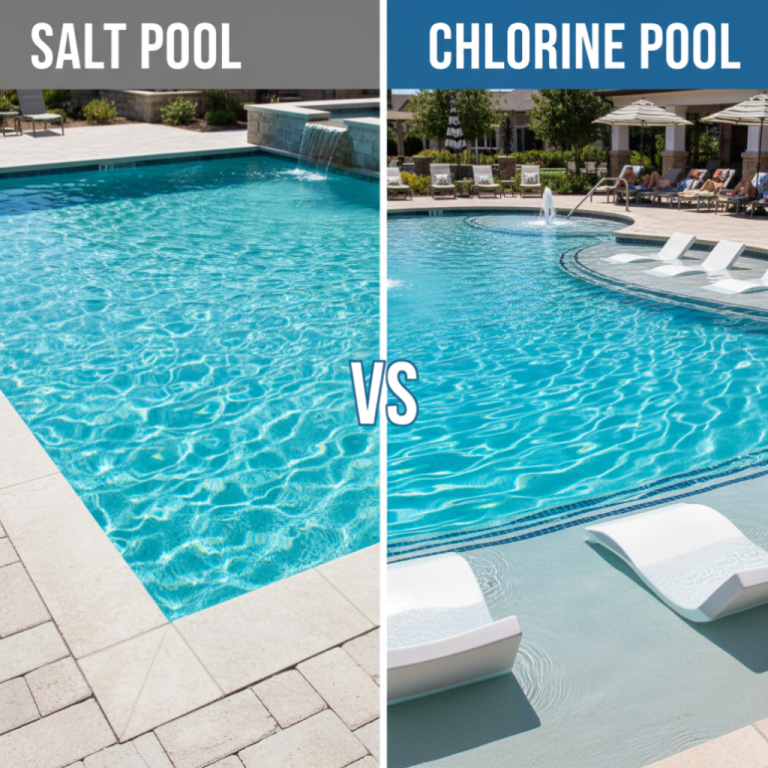
In this guide, we are going to break down the salt water vs chlorine pool debate. We will look at the costs, the maintenance requirements, and the swimming experience so you can make the right choice for your backyard oasis.
Understanding the Basics: It’s All Chlorine Anyway
Before we dive into the pros and cons, we need to clear up the biggest myth in the pool industry. There is actually no such thing as a “chlorine-free” salt water pool.
A salt water pool is a chlorine pool.
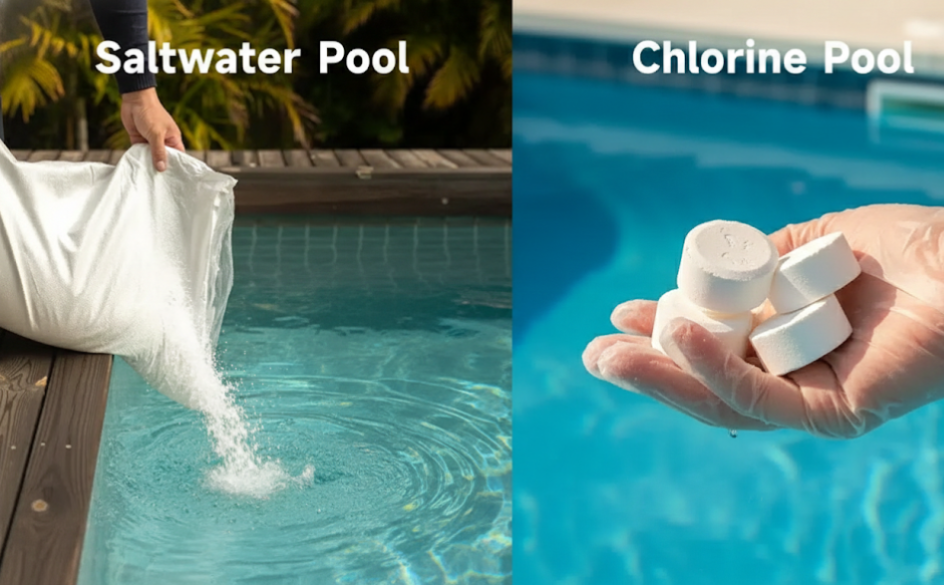
Here is how it works. In a traditional chlorine pool, you manually add chlorine tablets or liquid to the water to kill bacteria and algae. In a salt water pool, you add bags of salt to the water. A piece of equipment called a salt chlorine generator (or salt cell) uses electrolysis to break down the salt (sodium chloride) and generate chlorine gas. This gas dissolves into the water and sanitizes it just like traditional chlorine does.
The difference isn’t the sanitizer itself; it is the delivery method. This distinction changes everything about how you manage the pool.
Traditional Chlorine Pools: The Old Faithful
For a long time, chlorine was the only game in town. It is effective, powerful, and widely understood by pool owners and service professionals alike.
How it works:
You test your water, determine the chlorine demand, and add chemicals directly. This usually involves placing tablets in a skimmer basket or a floating dispenser, or pouring liquid chlorine directly into the deep end.
The Pros:
- Lower Upfront Cost: A standard chlorine setup is generally included in the base price of most pool builds. You don’t need expensive machinery to get started.
- Simple Equipment: There are fewer parts to break. If your chlorinator fails, it is usually a cheap plastic part to replace.
- Effective in Cold Weather: This is crucial for us in the Northeast. Salt cells often shut down when water temperatures drop below 60 degrees. Traditional chlorine works as long as you can circulate the water.
The Cons:
- The “Chlorine Smell”: That distinct pool smell isn’t actually chlorine; it is chloramines—a byproduct formed when chlorine reacts with sweat, oils, and urine. Traditional pools are more prone to this buildup if not shocked regularly.
- Harsher on Skin and Eyes: The chemical spikes that happen when you manually add chlorine can lead to red eyes, dry skin, and faded swimsuits.
- More Frequent Maintenance: You are the chemist. You have to buy, store, and handle harsh chemicals regularly.
Salt Water Pools: The Modern Favorite
Salt water pools have become the standard for new luxury inground pools in Bucks County and beyond. They offer a different sensory experience that many homeowners prefer.
How it works:
You dissolve pool-grade salt into the water. The generator runs while your pump is on, constantly producing a steady, low level of chlorine.
The Pros:
- Softer Water: This is the number one selling point. The salt content is roughly 3,000 ppm (parts per million), which is about one-tenth the salinity of the ocean. It acts as a natural water softener, making the water feel silky smooth on your skin.
- No Harsh Swings: Because the generator trickles chlorine in constantly, you avoid the “peaks and valleys” of sanitization. This prevents the formation of chloramines, meaning no chemical smell and no burning eyes.
- Convenience: You don’t have to handle chlorine tablets. You generally only need to add salt once or twice a season, usually after opening the pool or after heavy rainstorms dilute the water.
The Cons:
- Higher Upfront Cost: You have to buy the salt cell and the control board. This can add $1,500 to $2,500 to your initial installation cost.
- Corrosion Risks: Salt is corrosive. If you have metal walled pools, metal handrails, or stone coping that isn’t properly sealed, the salt can cause damage over time.
- Expensive Repairs: Salt cells don’t last forever. They typically need to be replaced every 3 to 5 years, which can cost anywhere from $500 to $900.
Feature Comparison: Salt Water vs Chlorine Pool
Sometimes it helps to see the data side-by-side. Here is how the two systems stack up against each other.
| Feature | Traditional Chlorine Pool | Salt Water Pool |
| Initial Cost | Low | High ($1,500 – $2,500 extra) |
| Annual Chemical Cost | High ($300 – $800/year) | Low ($70 – $100/year) |
| Water Feel | Can be harsh or drying | Silky, soft, natural |
| Eye/Skin Irritation | Common | Rare |
| Maintenance Effort | High (Weekly attention) | Low (Monthly attention) |
| Equipment Lifespan | Long (Simple parts) | Medium (Cell needs replacement) |
| Effect on Clothing | Fades colors quickly | Gentler on fabrics |
The Reality of Pool Maintenance
Regardless of which system you choose, you cannot ignore the pool. “Maintenance-free” does not exist in the pool industry. However, the type of labor changes depending on your choice.
Maintaining a Chlorine Pool
If you choose a traditional system, you need to be disciplined. You must test the water chemistry at least once or twice a week.
You will need to balance the pH, alkalinity, and calcium hardness, just like any pool. But the chlorine levels require constant vigilance. If you forget to add tablets before a heatwave or a pool party, your chlorine level can drop to zero in a matter of hours. Once that happens, algae blooms can take hold. Turning a green pool clear again is expensive and time-consuming.
You also need to “shock” the pool weekly or bi-weekly to burn off those chloramines we mentioned earlier. This involves dumping a large amount of oxidizer into the water, which means you typically cannot swim for 12 to 24 hours afterward.
Maintaining a Salt Water Pool
With a salt system, the day-to-day grind is significantly easier. You do not need to buy buckets of tablets. The generator does the heavy lifting.
However, you must maintain the generator itself. The salt cell contains metal plates that can build up calcium scale over time. If they get calcified, they stop producing chlorine. You need to inspect the cell every few months and clean it with a mild acid solution if necessary.
You also have to watch your pH levels closely. The chemical reaction that creates chlorine from salt naturally raises the pH of your pool water. This means salt pool owners often have to add muriatic acid to the water more frequently than chlorine pool owners do to keep the pH balanced.
Pro Tip: Even with a salt pool, keep a small bucket of granular chlorine or shock on hand. If your pump fails or you have a massive bather load (like a graduation party), the salt cell might not keep up, and you may need a manual boost.
Health and Comfort: The Pennsylvania Factor
Living in Pennsylvania, our swim season is relatively short—typically from Memorial Day to Labor Day, maybe stretching into September if you have a heater. You want to maximize every single minute of that time.
This is where the salt water argument usually wins.
Many people who suffer from asthma or allergies find salt water pools much easier to tolerate. The lack of chloramines means better air quality around the pool surface. If you have children who spend hours underwater with their eyes open, salt water is far less likely to leave them with red, stinging eyes at the end of the day.
Furthermore, the “soft” feel of the water is noticeable. It leaves your skin feeling moisturized rather than dry and chalky. When you get out of a salt pool, you don’t feel the immediate urge to shower off the “pool smell.”
Cost Analysis: Long Term vs Short Term
We talk to clients about this every day at FS Landscaping Contractors. Budget is always a factor in a construction project.
A salt water system will cost you more on day one. When you are already paying for excavation, concrete, fencing, and landscaping, adding another $2,000 might seem unappealing.
However, you have to look at the operational costs.
- Chlorine Pools: You are essentially “renting” your sanitation. You pay a continuous subscription fee in the form of expensive buckets of tablets and shock. In a humid PA summer, this adds up fast.
- Salt Pools: Salt is incredibly cheap. A 40lb bag costs less than $10. Once your levels are set, you might only need $50 worth of salt for the entire season.
The tradeoff comes when the salt cell dies. In roughly 5 years, you will drop a lump sum to replace it. When you average it out over 10 years, the costs are remarkably similar. You are simply choosing between paying a little bit constantly (chlorine tablets) or paying a large amount infrequently (salt cell replacement).
Which One is Right for Your Backyard?
So, how do you decide?
Choose a Salt Water Pool if:
- You have sensitive skin or eyes.
- You want the most luxurious swimming experience possible.
- You travel often and can’t add tablets every few days.
- You are building a new fiberglass or vinyl liner pool (these materials handle salt very well).
Choose a Chlorine Pool if:
- You are on a strict upfront budget for your build.
- You are comfortable handling chemicals and following a schedule.
- You have a concrete pool with natural stone coping (limestone or sandstone) that you don’t want to seal regularly.
- You want a system that is low-tech and easy to fix yourself.
How FS Landscaping Contractors Can Help
At FS Landscaping Contractors, we believe your backyard should be your personal resort. Whether you are in Bucks County or the surrounding areas, we specialize in designing and building pools that fit your lifestyle.
We don’t just dig the hole; we look at the whole picture. We help you choose the right sanitation system, the perfect decking to match, and the landscape lighting to set the mood at night.
If you are worried about the corrosion risks of salt, we can guide you toward salt-friendly materials, like sealed pavers or specific types of natural stone that resist wear. If you prefer the reliability of chlorine, we can set you up with an automatic chlorinator that makes dosing easier.
We can also assist with the landscape design around the pool to ensure your plants are tolerant of whichever water type you choose (splashing salt water can harm certain plants!).
Conclusion
The debate between salt water vs chlorine pool doesn’t have a single winner. It comes down to what you value most: the initial price tag or the daily experience.
For most of our clients, the comfort of salt water makes it the preferred choice. The silky water and lack of eye irritation create a swimming environment that feels premium and relaxing. However, traditional chlorine remains a reliable, cost-effective workhorse that has kept pools clean for generations.
Your pool should be a source of joy, not stress. Understanding these differences ensures you know exactly what you are signing up for before the first shovel hits the ground.
Ready to start planning your dream pool? Contact FS Landscaping Contractors today. Let’s discuss your vision and build a backyard you’ll never want to leave.