Pool Design Consultation Checklist for Homeowners
A productive pool design consultation starts before you sit down with a builder. You do not need a finished plan, but you should understand how you want to use the space, what the yard must accommodate, and which decisions matter most to your household.
This checklist helps you organize those ideas without locking yourself into a shape, finish, or feature too early. Bring it to your first design conversation so the discussion stays focused on your property and priorities.
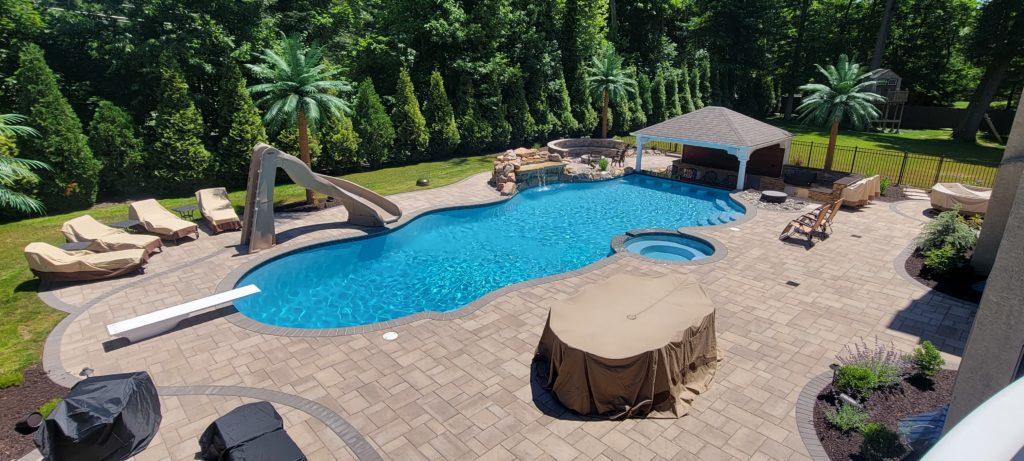
1. Decide how you want to use the pool
Start with activities rather than features. The right layout for exercise can be very different from one built mainly for casual gatherings or quiet relaxation.
Write down the two or three uses that matter most:
- Swimming laps or other exercise
- Relaxing in the water
- Entertaining family and friends
- Creating a comfortable area for children or frequent guests
- Combining a pool with an outdoor kitchen, pavilion, fire feature, or spa
Also think about how many people will typically use the space. This gives the designer useful context for circulation, seating, shallow areas, and the amount of patio around the water.
2. Make a must-have and nice-to-have list
Separate essential features from ideas you simply like. A short priority list makes it easier to compare layouts and understand where tradeoffs may be needed.
Your list might address:
- Pool shape and general size
- Steps, benches, or a sun shelf
- An attached spa
- A diving board or slide
- Waterfalls or other water features
- Lighting
- A pool cover
- Space for dining, lounge chairs, or shade
- Landscaping and privacy
If you are still choosing between concrete, fiberglass, and vinyl liner options, review the site's comparison of pool types before the consultation. Use it to prepare questions, not to make a final decision without discussing your property.
3. Bring photos of the house and yard
Clear photos help a designer understand the setting before a site review. Take wide shots from several angles, including views from the house toward the yard and from the yard back toward the house.
Include anything that may affect the layout, such as slopes, existing patios, mature trees, fences, sheds, retaining walls, utility equipment, drainage areas, and gates. If you have a property survey, bring that too. The designer can tell you what additional measurements or documentation will be needed later.
4. Collect inspiration, then explain what you like
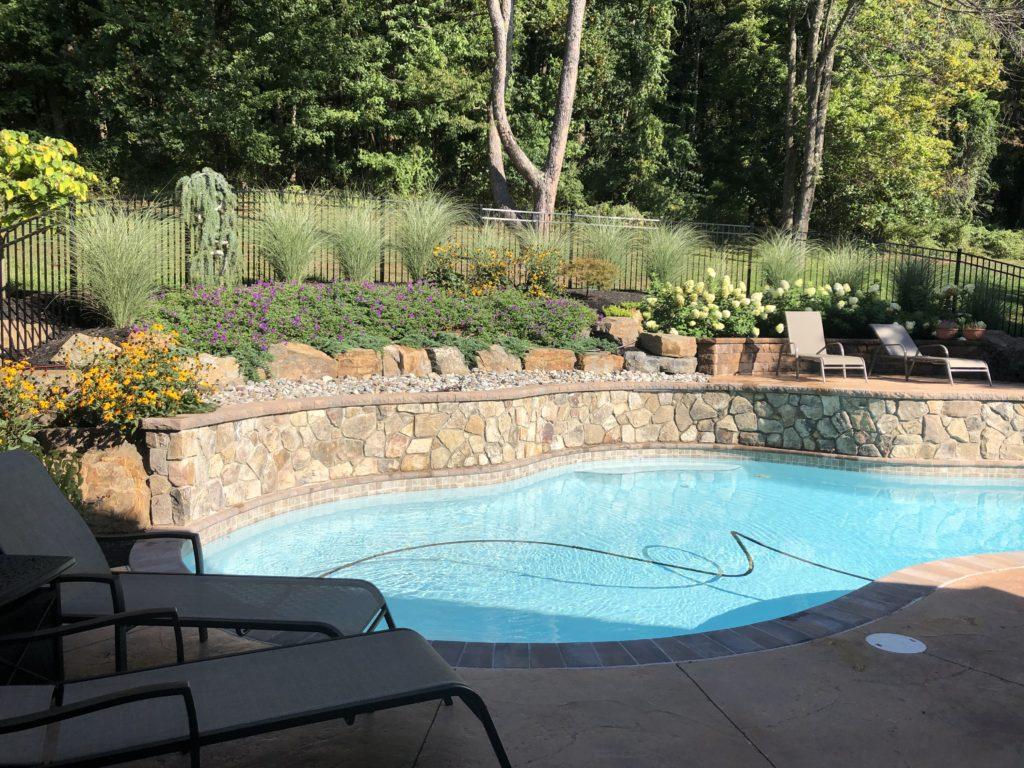
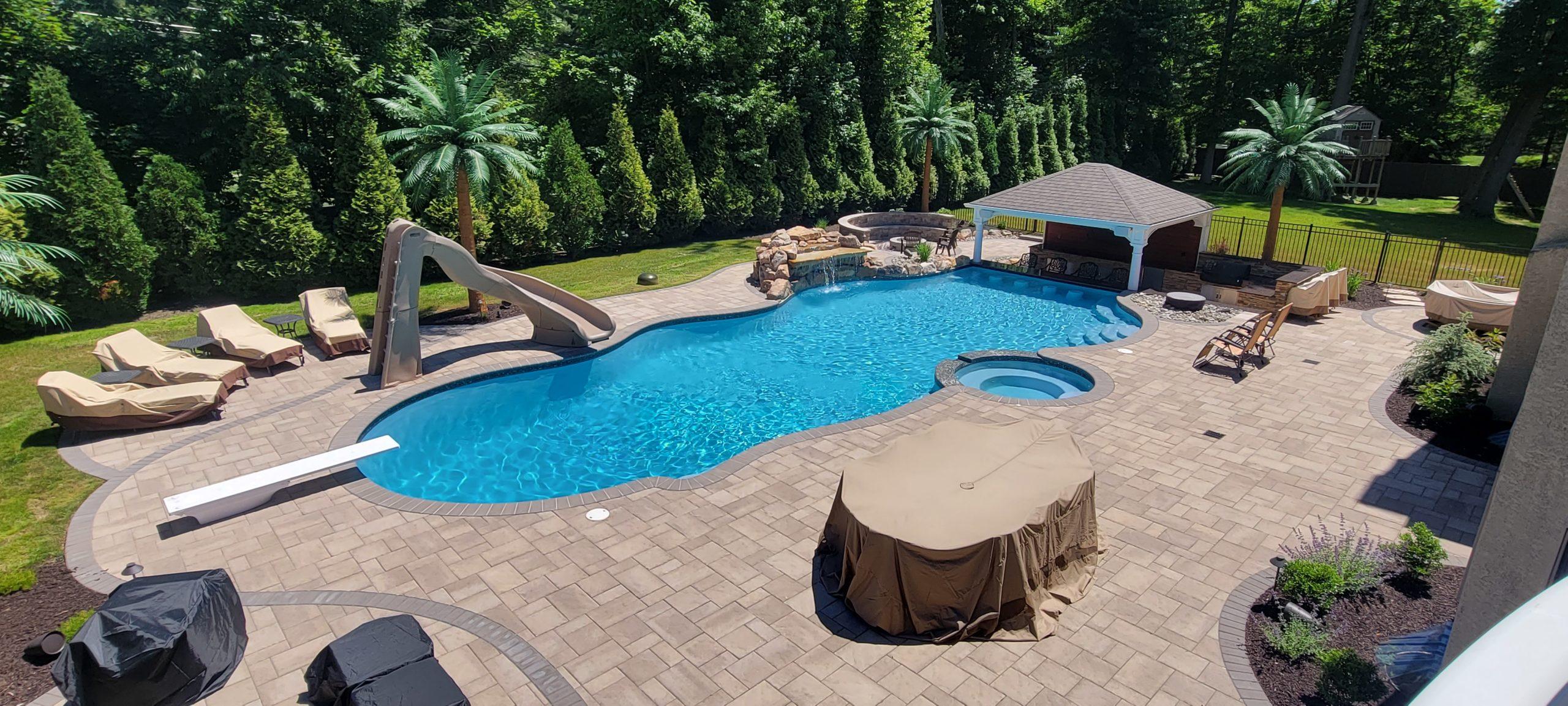
A few useful reference images are better than a folder full of unrelated pools. For each image, note the specific detail that caught your attention. It might be the shape, coping, patio color, planting style, steps, spa placement, or the way the pool relates to the house.
Browse the FS Landscaping Contractors pool portfolio for examples of complete outdoor spaces. You can also save examples from other sources, but treat them as visual references. A feature that works in one yard may need to be adapted for another property.
5. Think about the whole outdoor area
A pool does not sit in isolation. Discuss how people will move between the house, pool, seating, lawn, and any other outdoor features. Consider where wet feet will travel, where towels and pool supplies will go, and whether guests need a clear path that does not cut through a dining area.
Questions worth asking include:
- How much patio should remain open for walking and furniture?
- Where would shade be most useful during the hours we use the yard?
- How can planting add privacy without crowding the pool area?
- Where should equipment be placed for access while limiting its visual impact?
- Could a future pavilion, kitchen, or fire feature fit the plan?
Planning the full space now can help you avoid a pool layout that makes later outdoor improvements harder.
6. Discuss safety and access early
Ask how barriers, gates, covers, steps, water depth, lighting, and visibility from the house affect the design. Requirements can vary by property and municipality, so confirm the rules that apply to your address with the appropriate local authority and your contractor.
Also tell the designer about mobility needs in your household or among regular visitors. Entry style, handrails, step placement, walking surfaces, and the route from the house can all be considered during design rather than added as an afterthought.
7. Be ready to talk about the yard's practical limits
A design conversation should address more than appearance. Ask how grading, drainage, equipment access, existing utilities, trees, and the distance between the work area and street may influence the plan.
Do not assume that a screenshot from an online map provides enough detail. A site review and accurate property information are needed before a buildable plan can be confirmed.
8. Choose a realistic decision process
Before the consultation, decide who needs to approve the design and how you will compare options. If several people are involved, agree on the main priorities first. Conflicting preferences are easier to resolve while reviewing concepts than after selections have been finalized.
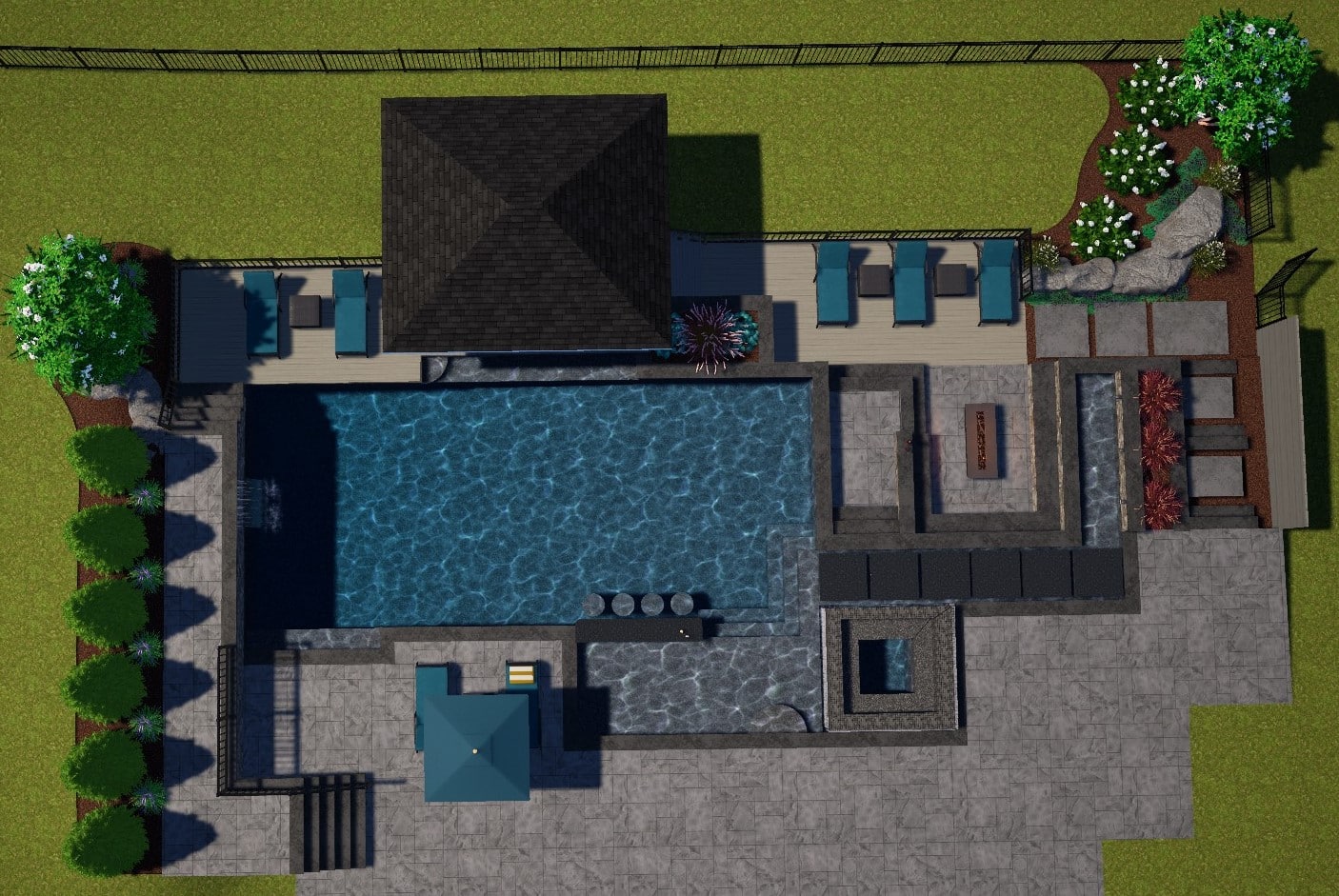
Ask what will be shown at each design stage, which selections are included, and when changes become harder to make. FS Landscaping Contractors states that its custom pool design and build process includes a detailed 2D AutoCAD design plan before contract approval and offers a 3D design option. Confirm the current process for your project during the conversation.
9. Bring a written question list
Use the consultation to understand both the proposed space and the next steps. Useful questions include:
- Which pool layouts fit this property best, and why?
- What information is still needed before a design can be finalized?
- Which choices have the greatest effect on the layout?
- How will the pool connect with patios, landscaping, fencing, and lighting?
- What site conditions should be investigated?
- How are revisions handled?
- What should we decide before the next meeting?
Write down the answers. Good notes make it easier to compare design options without relying on memory.
What not to decide too early
You may arrive with a favorite image or feature, but leave room for the site to guide the design. Exact dimensions, placement, structural details, material specifications, drainage, utilities, and code-related requirements should be confirmed through the proper design and review process.
The goal of the first conversation is not to force every choice. It is to give the designer enough context to develop a plan that fits how you live and how the property works.
Prepare for a more useful pool design conversation
Bring your priorities, property information, photos, inspiration, and questions. A clear starting point helps everyone focus on the same goals while leaving room for professional recommendations.
If you are ready to discuss a custom pool and the surrounding outdoor space, contact FS Landscaping Contractors to start a design conversation.