
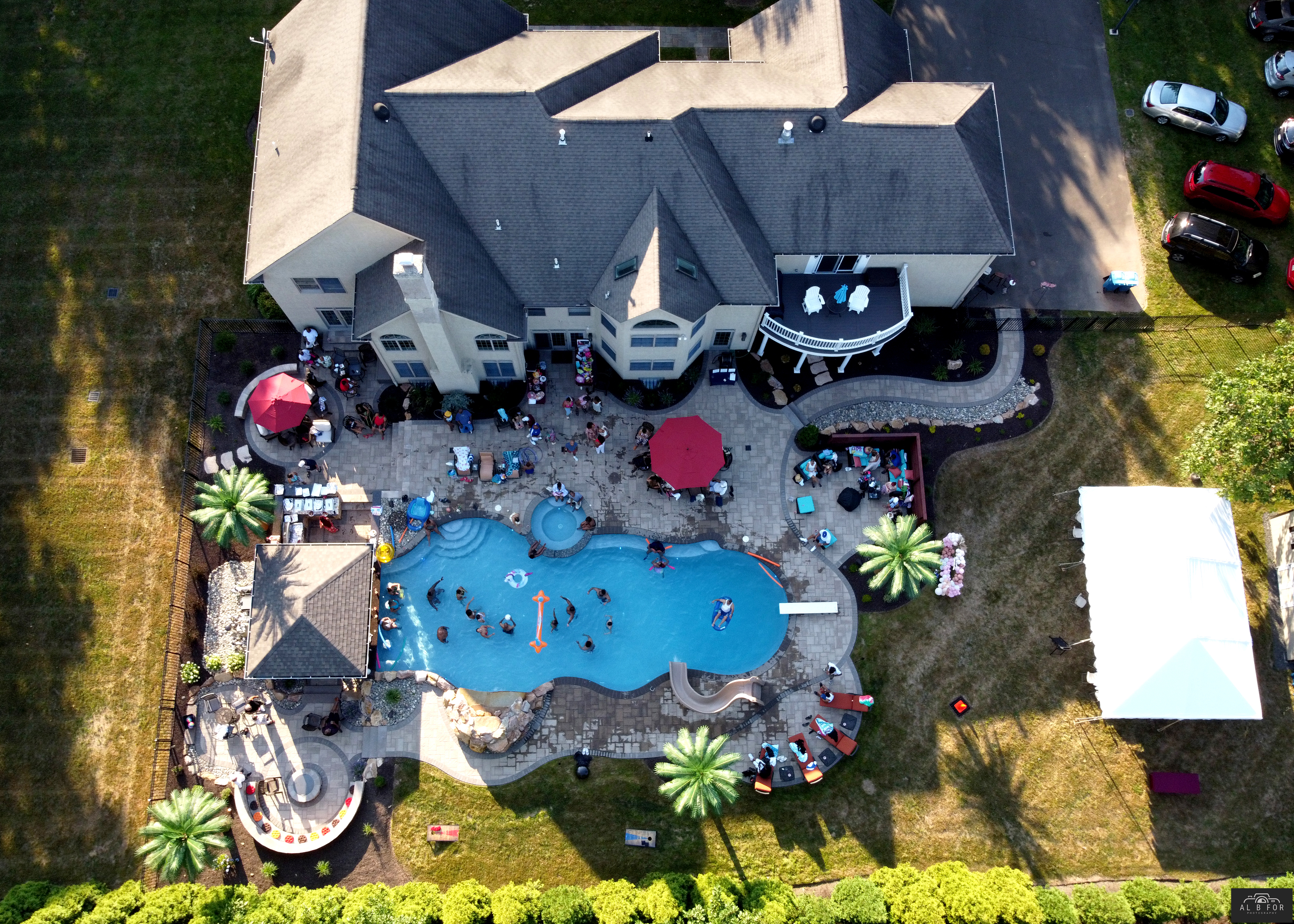
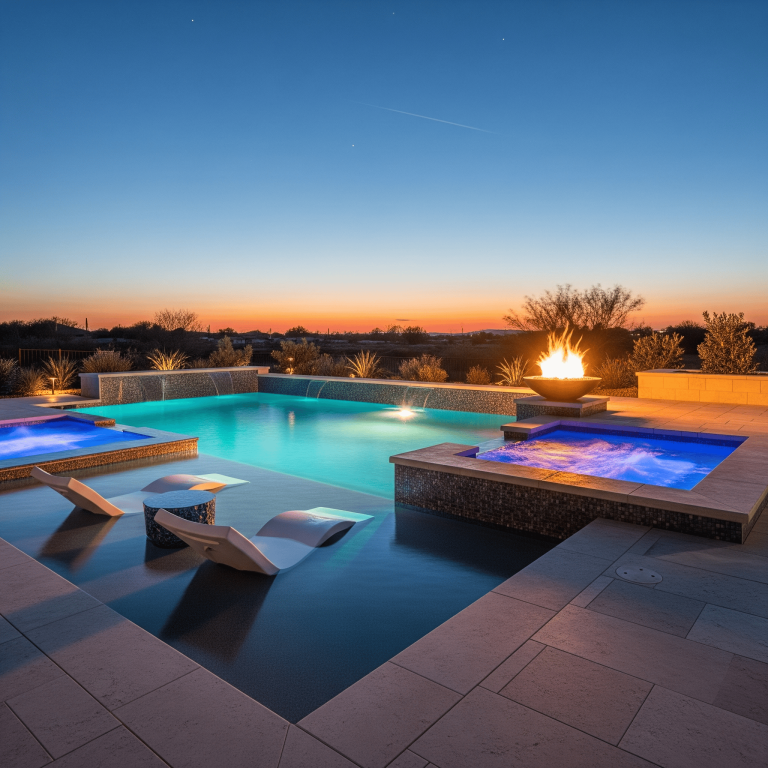
Finding the right in-ground pool builders in Pennsylvania is one of the most important decisions you’ll make for your home. A pool is a long-term investment—one that affects your property value, your family’s enjoyment, and your maintenance budget for decades. Get the builder wrong, and you’re left with cracked decking, leaking liners, or a project that drags past summer.
This article walks you through the two pool types that reputable Pennsylvania pool contractors actually build—concrete and vinyl liner—so you can compare them honestly. You’ll also get a step-by-step overview of the installation process, a plain-language FAQ, and the questions you should ask any local pool construction expert before signing a contract.
Key Takeaways
- In-ground pool builders in Pennsylvania offer concrete and vinyl liner installations.
- Concrete pools offer total design flexibility but require longer installation timelines.
- Vinyl liner pools are budget-friendly and faster to install than concrete.
- Licensed pool contractors in PA must follow state and local permitting requirements.
- Pool builder financing options can make in-ground pools more accessible for homeowners.
- Always verify that your pool contractor is licensed, insured, and has verifiable PA reviews.
Concrete vs. Vinyl Liner: The Two Main In-Ground Pool Types in PA
Before you call a single pool contractor near you in PA, you need to understand what you’re buying. Pennsylvania pool companies typically specialize in one or both of these two in-ground pool types. Each has a distinct construction method, cost profile, and long-term maintenance requirement.
(Note: Above-ground pools and fiberglass pools are outside the scope of this guide, as many PA in-ground pool specialists focus exclusively on concrete and vinyl liner construction.)
Concrete In-Ground Pools
Concrete pools—sometimes called gunite or shotcrete pools—are built by spraying a mix of cement and sand over a steel rebar framework. The shell is then plastered, tiled, or finished with an aggregate surface.
Concrete is the most customizable pool type available. If you want a freeform lagoon shape, a deep end for diving, a raised spa attached to the pool, or a custom tanning ledge, concrete is the only material that can deliver all of it.
Concrete Pool Pros and Cons
Pros:
- Virtually unlimited shape and size options
- Can be refinished and redesigned decades later
- Long structural lifespan when expertly constructed concrete pools
- Supports heavy water features, waterfalls, and attached spas
- Increases property value more than other pool types (industry experts suggest this is consistent across PA markets)
Cons:
- Longest installation timeline—typically 3 to 6 months
- Higher upfront cost than vinyl liner pools
- Requires resurfacing every 10 to 15 years
- Rough interior surfaces can be harder on feet and swimsuits
- Higher chemical consumption due to porous surface
Vinyl Liner In-Ground Pools
Vinyl liner pools are built using a steel, polymer, or aluminum frame, which is set into an excavated hole. A custom-manufactured vinyl sheet is then fitted over the frame to create a smooth, watertight surface.
Many Pennsylvania homeowners choose vinyl liner pools because they offer a clean, attractive finish at a significantly lower entry cost. Pool installation services in PA for vinyl liner pools are also faster than concrete—most projects wrap up in four to eight weeks.
Vinyl Liner Pool Pros and Cons
Pros:
- Lower initial cost than concrete
- Faster installation timeline
- Smooth surface is comfortable underfoot
- Liners come in a wide range of patterns and colors
- Easier to maintain proper water chemistry
Cons:
- Liner must be scheduled liner replacement every 8 to 12 years (cost varies by size)
- Susceptible to punctures and tears from sharp objects
- Fewer shape options than concrete (though many standard shapes are available)
- Cannot support as many built-in features as concrete
- Steel wall panels can corrode over time if not properly maintained
Side-by-Side Comparison Table
| Feature | Concrete | Vinyl Liner |
|---|---|---|
| Installation Time | 3–6 months | 4–8 weeks |
| Starting Cost Range | higher initial investment | budget-friendly entry costs |
| Shape Flexibility | Unlimited | Standard & semi-custom |
| Surface Comfort | Rough (textured plaster) | Smooth vinyl |
| Lifespan (structure) | 25–50+ years | 20–30+ years |
| Resurfacing/Liner Replacement | Every 10–15 years | Every 8–12 years |
| Chemical Demand | Higher | Lower |
| Best For | Custom designs, long-term investment | Budget-conscious buyers, faster build |
How to Choose: Conditional Guidance for Pennsylvania Homeowners
If you want a completely custom shape—an L-shape, a freeform design with natural curves, or a pool and spa combination—choose concrete. Vinyl liner pools are built around manufactured panels and cannot replicate fully custom geometry.
If you need your pool ready by a specific summer and you’re starting the process in early spring, a vinyl liner pool is your better option. Concrete pools require excavation, rebar installation, spraying, curing, plastering, and finishing—each step adding weeks to the schedule. Vinyl liner pools move through excavation and installation much faster.
If long-term resurfacing costs are a concern, factor in that concrete pools need replastering every decade or so, while vinyl liner pools require a liner replacement on a similar cycle. Neither is free, but the costs differ in type and timing.
If you’re building in a region of Pennsylvania with heavy clay soil or significant freeze-thaw cycles, discuss structural reinforcement options with your pool contractor. PA’s winters are a real engineering consideration for both pool types.
Step-by-Step: What to Expect from a Pennsylvania Pool Installation
Whether you go concrete or vinyl liner, the installation process follows a predictable path. Here’s what a typical project looks like when you work with licensed pool builders in PA:
- Initial Consultation and Design — You meet with the pool contractor to discuss your yard, budget, desired features, and pool type. A designer may use 3D rendering software to show you the finished product.
- Permitting — Your builder submits necessary building permits and approvals to your local municipality. In Pennsylvania, pool construction requires building permits, and many townships have specific setback requirements from property lines and structures.
- Site Preparation and Layout — The pool shape is marked out on your lawn. Utility lines are located and flagged before any digging begins.
- Excavation — Heavy equipment digs the hole to the required depth and shape. This typically takes one to three days depending on pool size and soil conditions.
- Structure Installation — For concrete pools, a rebar cage is built and concrete is applied by spray. For vinyl liner pools, the wall panels are assembled and set in place.
- Plumbing and Electrical — All underground plumbing lines, return jets, skimmers, and electrical conduit are installed before the pool is enclosed.
- Surface Finishing — Concrete pools receive their plaster, pebble, or tile finish. Vinyl liner pools have the custom liner measured, manufactured, and fitted.
- Decking and Coping — The surrounding deck—premium decking materials like pavers or stamped concrete—is installed along with the coping that frames the pool edge.
- Equipment Installation — The pump, filter, heater (if applicable), and automation systems are installed and connected.
- Final Inspection and Water Fill — A municipal inspector signs off, and the pool is filled with water. Your contractor walks you through startup chemistry and equipment operation.
Do’s and Don’ts When Hiring Pool Builders in Pennsylvania
Do:
- ✅ Verify their status via the Pennsylvania Office of Attorney General to ensure the contractor holds a valid PA Home Improvement Contractor (HIC) registration
- ✅ Ask for references from recent PA pool builds specifically
- ✅ Get at least three written quotes before committing
- ✅ Confirm the contractor pulls permits on your behalf
- ✅ Ask what warranty covers both workmanship and equipment
Don’t:
- ❌ Pay more than 10–30% as an initial deposit before work begins
- ❌ Hire based on price alone—the lowest bid often reflects cut corners
- ❌ Skip the contract review—ensure scope, timeline, and materials are specified in writing
- ❌ Assume all pool builder reviews in PA reflect the same quality standards—check multiple platforms
- ❌ Neglect to ask about post-installation service and maintenance support
Hypothetical Case Study: The Kellerman Family, Bucks County, PA
The Kellermans had a mid-sized backyard in a suburban Bucks County community and a clear budget ceiling. They initially wanted a concrete pool with a built-in spa but received quotes that exceeded their budget significantly. After consulting with two in-ground pool companies in PA, they pivoted to a vinyl liner pool with a freestanding hot tub. The project was completed in six weeks—well before the Fourth of July. Three years later, they report no liner issues and estimate the pool added measurable appeal when their neighbors’ home sold nearby for more than asking price. Their key advice: “Get the permit pulled before summer, not during it.”
Quick Answers: FAQ for Pennsylvania Pool Buyers
How much does an in-ground pool cost in Pennsylvania? Costs vary widely based on size, type, and features. Vinyl liner pools generally start lower than concrete pools. Many local pool construction experts recommend budgeting for decking, fencing, and landscaping in addition to the pool itself.
How long does it take to build an in-ground pool in PA? Vinyl liner pools typically take four to eight weeks from excavation to water. Concrete pools take three to six months. Both timelines depend on permit speed, weather, and contractor scheduling.
Do I need a permit to build a pool in Pennsylvania? Yes. Pennsylvania municipalities require building permits for in-ground pools. Most townships also require pool enclosures or fencing that meets specific safety codes. Your licensed pool builder in PA should handle permit applications.
What’s the difference between a gunite and a vinyl liner pool? Gunite (a type of concrete) is sprayed over a steel framework and finished with plaster or aggregate. Vinyl liner pools use a prefabricated liner over a panel frame. Gunite allows more design flexibility; vinyl liner is faster and often lower cost.
How do I find the best-rated pool builders in PA? Check platforms like Google Reviews, Houzz, and the Better Business Bureau. Ask for references from completed PA projects and verify the contractor’s Home Improvement Contractor registration with the Pennsylvania Attorney General’s office.
Does a pool increase home value in Pennsylvania? Many real estate professionals and appraisers note that in-ground pools add value in suburban and exurban PA markets, particularly when they’re well-maintained and complement the property’s overall size and style.
What financing options do pool builders offer? Many residential pool contractors in PA offer flexible financing solutions through third-party lenders or manufacturer programs. Home equity loans and HELOCs are also commonly used. Always compare rates before committing.
Is concrete or vinyl better for Pennsylvania winters? Both can be winterized successfully. Concrete pools require acid washing and careful chemical balancing before closing. Vinyl liner pools are vulnerable to liner damage if water chemistry is off during the freeze-thaw cycle. A qualified PA pool contractor will walk you through winterization procedures specific to your pool type, following healthy swimming water chemistry guidelines from the CDC.
Can I add features like a waterfall or tanning ledge to a vinyl liner pool? Some features can be incorporated into vinyl liner pools, but the range is more limited than concrete. Tanning ledges and shallow beach entries are achievable; large freeform waterfalls and fully integrated spa systems are better suited to concrete construction.
How often does a vinyl liner need to be replaced? Most liners last eight to twelve years with proper water chemistry and maintenance. Sun exposure, chemical imbalances, and physical damage can shorten liner life.
Conclusion: Build the Right Pool With the Right Pennsylvania Contractor
An in-ground pool is one of the highest-impact upgrades a Pennsylvania homeowner can make. Whether you’re drawn to the total design freedom of a concrete pool or the speed and affordability of a vinyl liner installation, the outcome depends heavily on the quality of the contractor you choose.
Work with licensed pool builders in PA who pull permits, carry proper insurance, provide written warranties, and have a traceable record of completed local projects. Compare at least three quotes, ask pointed questions about timelines and subcontractors, and make sure you understand the full cost picture—including decking, fencing, and long-term maintenance—before you sign anything.
Ready to start? Contact a certified in-ground pool builder in Pennsylvania today to schedule your free design consultation and get a written estimate tailored to your yard and budget.