
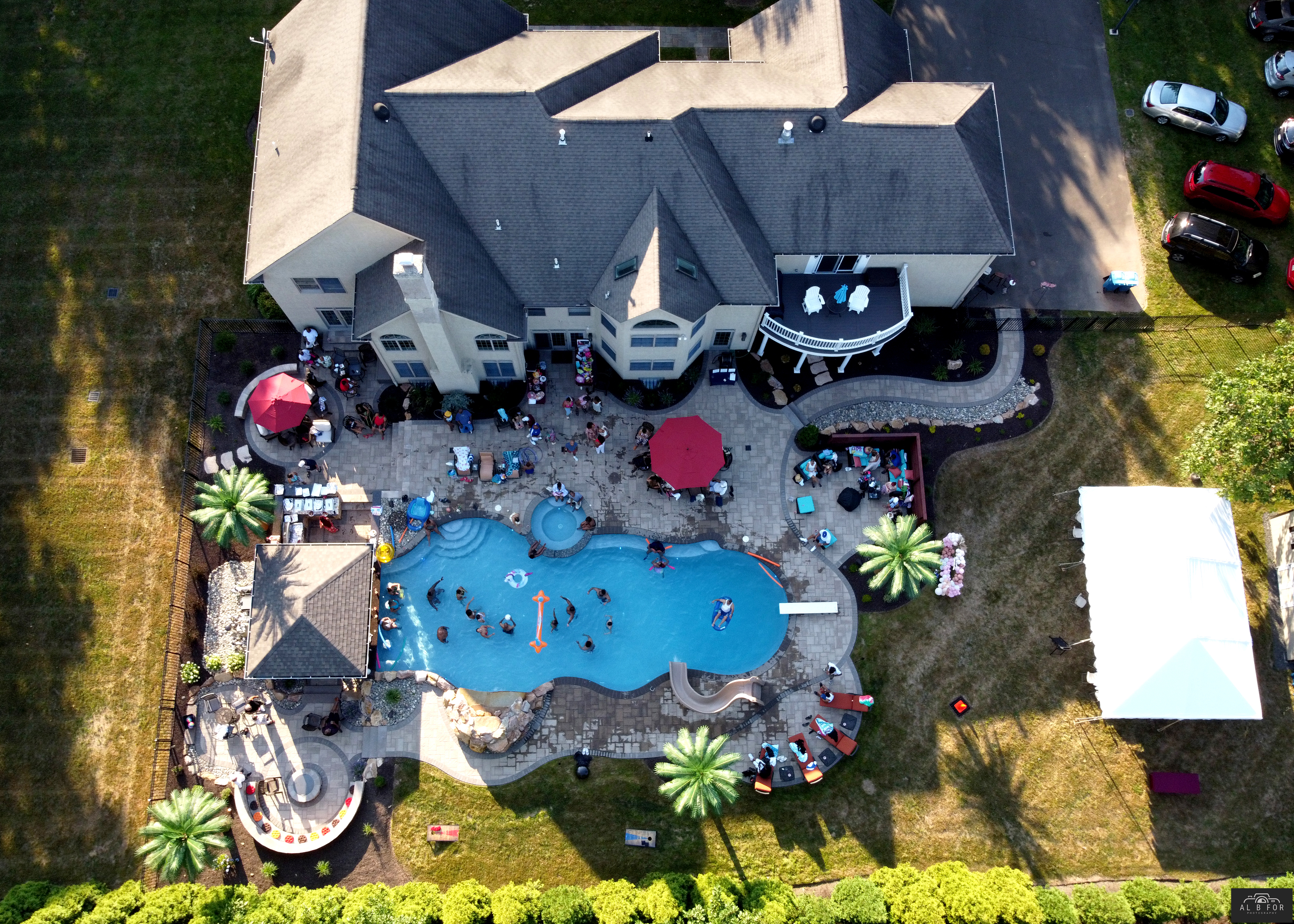
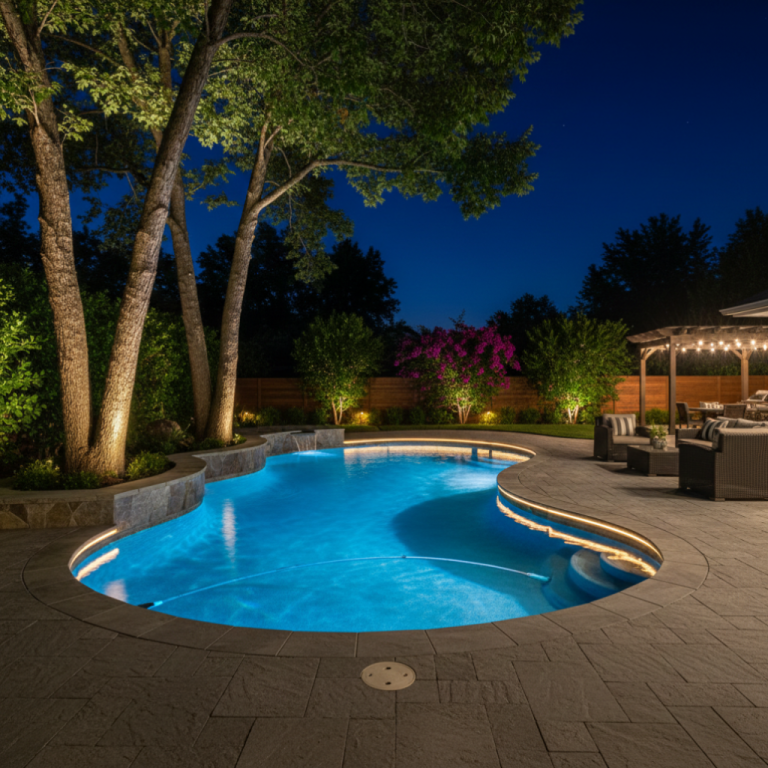
Adding an in-ground pool to your Pennsylvania property is one of the most rewarding home improvement investments you can make — but it is also one of the most complex. Whether you live in the suburbs of Philadelphia, a township outside Pittsburgh, or a rural county in central PA, the process of sourcing pool installation services PA homeowners depend on involves dozens of moving parts: permits, excavation, plumbing, electrical, landscaping, and final inspections. You can review our complete step-by-step installation timeline to see how each phase connects. This article walks you through every phase of the construction timeline, explains what licensed pool builders in PA are responsible for, and helps you ask the right questions before signing a contract with pool contractors near you. By the time you finish reading, you will know exactly what to expect — and how to avoid the most common pitfalls PA homeowners face.
Key Takeaways
- Pool installation services PA projects follow a structured, multi-phase process.
- Permits and site preparation are the most time-consuming early phases.
- Licensed pool builders in PA are required for all structural and electrical work.
- Choosing in-ground pool companies PA homeowners can verify means checking credentials and reviews.
- Weather and soil conditions unique to Pennsylvania can affect your build timeline.
- Financing options and detailed contracts protect your investment from start to finish.
Why Pool Construction in Pennsylvania Is Different
Pennsylvania’s geography, climate, and local regulations create a specific set of conditions that affect every in-ground pool build. The state spans multiple climate zones, from the milder southeastern counties to the harsher winters in the northeast and northwest. Frost depth requirements, soil composition (especially in regions with shale or clay), and municipal zoning rules all influence how a project is planned and executed.
Industry guidance from the Association of Pool & Spa Professionals (APSP) and the National Swimming Pool Foundation (NSPF) underscores the importance of working with contractors who understand regional conditions. For Pennsylvania specifically, local pool construction experts who hold a valid registration, which you can verify via the official Pennsylvania Attorney General contractor registry, are best positioned to navigate these requirements.
If you are evaluating pool builders in Pennsylvania for the first time, the single most important factor is not price — it is whether the contractor holds the proper licenses, carries adequate liability insurance, and can provide a full portfolio of completed projects in your county or township.
The Complete Pool Installation Timeline: Step by Step
The following steps reflect how most licensed pool builders PA homeowners work with will structure your project. Timelines are approximate and can vary significantly based on permit office backlogs, weather, and your pool’s complexity.
Step 1: Initial Consultation and Design (1–2 Weeks)
Your contractor will visit the property, assess the yard’s slope, soil type, and utility lines, and discuss your design preferences. This phase produces a preliminary layout, a detailed quote, and an initial materials list. Many local pool construction experts use 3D rendering tools so you can visualize the finished pool before a single shovel touches the ground.
Step 2: Contract Signing and Permit Application (2–4 Weeks)
Once you sign a contract, your contractor submits permit applications to your municipality. In Pennsylvania, permits are mandatory for all in-ground pool installations; refer to our 2025 guide to essential pool permits and approvals to understand local requirements. Depending on your township or borough, permit approval can take anywhere from two to six weeks. This phase is one of the most common sources of delay — and a key reason why reputable pool contractors near you will apply for permits immediately after the contract is signed.
Step 3: Site Preparation and Excavation (1–2 Days to 1 Week)
Once permits are in hand, excavation begins. Crews use heavy equipment to dig to the required depth and shape. The timeline depends on your pool’s size, the presence of rocks or tree roots, and soil conditions. Rocky terrain — common in many PA counties — can add several days.
Step 4: Steel Reinforcement and Plumbing Rough-In (3–5 Days)
A steel rebar framework is installed to reinforce the pool shell. Simultaneously, the main plumbing lines — including drains, returns, and skimmer lines — are laid in trenches leading to the equipment pad. Rough-in plumbing inspections are typically required before the next phase begins.
Step 5: Shotcrete or Gunite Application (1–2 Days)
Concrete is pneumatically sprayed (“shot”) over the rebar framework to form the structural shell. The shell must cure for a minimum period — typically 28 days — before finish surfaces can be applied. Skipping or shortening this curing period is a major warning sign when evaluating pool builder reviews PA.
Step 6: Tile, Coping, and Deck Work (1–3 Weeks)
Tile is applied at the waterline, while pool coping materials and styles are selected to finish the perimeter—explore our full guide to see which option suits your design. Coping stones are installed around the pool’s perimeter, and the deck surface is poured or laid. Not sure which to pick? Read our expert tips for choosing the perfect pool deck material to compare concrete, pavers, and more. Deck work often runs concurrently with other finishing tasks to keep the schedule tight.
Step 7: Equipment Installation (1–3 Days)
Pumps, filters, heaters, and automation systems are mounted on the equipment pad and connected to the plumbing and electrical systems. Pennsylvania requires licensed electricians to handle all pool electrical work, strictly adhering to National Fire Protection Association standards for electrical safety (NFPA 70) regarding bonding and grounding.
Step 8: Interior Finish (Plaster, Pebble, or Quartz) (1–2 Days)
The interior of the pool shell receives its finish coat. Plaster is the most economical option; pebble and quartz aggregates cost more but offer greater durability and aesthetic variety. After application, the pool is immediately filled with water — never left to dry — to prevent surface cracking.
Step 9: Final Inspection and Startup (3–7 Days)
A municipal inspector verifies that the completed installation meets all building and safety codes — including fence and barrier requirements that align with the U.S. Consumer Product Safety Commission guidelines for pool barriers. The contractor then balances the water chemistry and walks you through system operation before formally handing the pool over. Learn more about balancing pool safety codes with backyard beauty in our dedicated fencing guide.
Pool Type Comparison: What In-Ground Pool Companies PA Offer
Most reputable in-ground pool companies in PA offer concrete (gunite/shotcrete) and vinyl-liner pools as their primary product lines. Here is how they compare across the factors that matter most to PA homeowners.
| Factor | Concrete (Gunite/Shotcrete) | Vinyl Liner |
|---|---|---|
| Design Flexibility | Unlimited shapes and depths | Standard shapes; limited customization |
| Durability | 30–50+ years with proper care | Shell lasts decades; liner replaced every 7–12 years |
| Surface Feel | Textured; varies by finish | Smooth and soft underfoot |
| Initial Cost (PA Average) | Higher upfront investment | Lower upfront cost |
| Maintenance | More demanding; pH management critical | Moderate; liner integrity must be monitored |
| Resale Value | Generally higher impact on home value | Moderate impact on home value |
| Best For | Custom builds, long-term investment | Budget-conscious buyers, faster builds |
Note: Fiberglass and above-ground pools are not offered by this contractor. All builds are custom in-ground installations.
Pros and Cons of Hiring Local Pool Construction Experts
Pros
- Deep familiarity with Pennsylvania permit offices, reducing approval delays.
- Knowledge of local soil and frost conditions that affect structural engineering decisions.
- Established relationships with local suppliers, which can improve material lead times.
- Easier communication, site visits, and post-installation service calls.
- Accountability through local licensing boards and state consumer protection offices.
Cons
- Smaller local firms may have longer scheduling backlogs during peak season (May–August).
- Limited online presence can make verifying pool builder reviews PA more difficult.
- Fewer design showrooms or technology tools compared to large regional chains.
Do’s and Don’ts When Choosing Pool Contractors Near You in PA
DO
- Do verify that your contractor holds a Pennsylvania Home Improvement Contractor (PHIC) registration.
- Do request a detailed written contract that specifies materials, milestones, and payment schedule.
- Do ask about financing options before signing; use our pool loan calculator and financing simplified guide to estimate monthly payments accurately.
- Do check references and read verified pool builder reviews PA before committing.
- Do confirm that all permit applications are included in the contract scope of work.
DON’T
- Don’t pay more than a 10–20% deposit before work begins.
- Don’t allow a contractor to skip or rush the shotcrete curing phase.
- Don’t base your decision on price alone — lowest bids often omit critical line items.
- Don’t sign a contract that lacks a clear warranty for both workmanship and equipment.
- Don’t assume fence installation is included — confirm this is addressed in your permit scope.
Choosing the Right Approach: Conditional Guidance for PA Homeowners
If you have a uniquely shaped yard or want a custom freeform design, concrete (gunite/shotcrete) construction is the appropriate choice. It allows for any shape, depth, or built-in feature — from beach entries to attached spas — that a standard vinyl-liner package cannot accommodate.
If your primary concern is controlling upfront costs while still getting a durable, attractive in-ground pool, a vinyl-liner pool built by best-rated pool builders PA may be the right fit. Liner replacements are a known, plannable future cost, and the initial investment is typically lower than a comparable concrete build.
If you are concerned about timeline and want the fastest possible construction, discuss scheduling availability with your contractor early. Most residential pool contractors PA will note that projects starting in late fall or early spring can often achieve faster permit turnarounds and better crew availability than peak summer starts.
Real-World Example: A Hypothetical Chester County Build
(Note: The following is a representative scenario based on typical PA construction timelines. It is not based on a specific verified project.)
A local family worked with our team of premier swimming pool builders serving Chester County for a 16×32 concrete pool with attached spa and travertine coping. The permit application was submitted the following week and approved in 23 days — faster than average due to the off-season filing. Excavation started in mid-March. The project encountered a 4-day delay when crews discovered a significant subsurface rock shelf requiring jackhammering. Despite this, shotcrete was applied in early April, the full curing period was respected, and the family held their first swim in late June — roughly 18 weeks from contract to water.
The takeaway: even with an unexpected geological delay, a well-managed project by a responsive pool contractor near you can stay within a reasonable timeframe. Early-season starts and prompt permitting were the key factors in minimizing delays.
Pool Builder Financing Options in Pennsylvania
In-ground pools represent a significant investment, and most reputable pool contractors offer or facilitate several financing pathways. Common options available through best-rated pool builders PA include home equity loans, home equity lines of credit (HELOCs), unsecured pool financing through third-party lenders, and contractor-arranged point-of-sale financing programs.
Home equity options typically offer the lowest interest rates because the loan is secured by your property. Unsecured pool financing is faster to obtain but carries higher rates. Many homeowners report that monthly payment amounts — when spread over 10–15 years — make a project far more manageable than the lump-sum sticker price suggests.
Before choosing a financing path, review your credit score, available home equity, and how long you plan to stay in your home. A financial advisor or your bank can help you compare structures. Your pool builder’s financing partner is a starting point, not the only option.
Quick Answers: Frequently Asked Questions About Pool Installation Services PA
How long does it take to build an in-ground pool in Pennsylvania? Most in-ground pool projects in PA take between 6 and 14 weeks from permit approval to first use. Concrete pools take longer than vinyl-liner pools due to the required curing period.
Do I need a permit for an in-ground pool in PA? Yes. Pennsylvania municipalities require building permits for all in-ground pool installations. Your licensed pool builder should handle the application process as part of their scope of work.
What does a licensed pool builder in PA need to carry? At minimum, your contractor should hold a Pennsylvania Home Improvement Contractor (PHIC) registration, general liability insurance, and workers’ compensation coverage. Electrical subcontractors must hold PA electrical licenses.
What is the best time of year to start a pool installation in Pennsylvania? Fall and late winter (October through February) are ideal start times. Permits are processed faster, contractor schedules are more flexible, and the pool can be ready for the following summer swim season.
How much does an in-ground pool cost in Pennsylvania? Costs vary widely based on pool type, size, features, and site conditions. For a transparent estimate, view our detailed breakdown of inground pool costs in Pennsylvania. Vinyl-liner pools are generally less expensive upfront than concrete builds. Request itemized quotes from at least three pool contractors near you for an accurate comparison.
What fence requirements apply to pools in Pennsylvania? Pennsylvania law requires a fence or barrier that meets specific height and gate requirements around residential pools. Your municipality may have additional requirements. Confirm fence specifications are addressed in your permit and contract.
Do in-ground pool companies in PA offer warranties? Reputable in-ground pool companies PA typically offer separate warranties for the pool shell/structure and for installed equipment. Read the warranty terms carefully — coverage periods and exclusions vary significantly between contractors.
Can I finance my pool through my pool builder? Many residential pool contractors PA have partnerships with third-party lending companies that offer point-of-sale financing. These programs can be convenient but compare the rates and terms against your bank or home equity options before committing.
What questions should I ask during a pool builder consultation? Ask about PHIC registration, proof of insurance, permit handling, warranty terms, curing time policies, subcontractor use, and a list of recent projects in your county. Request references and check verified online reviews before signing.
What is the difference between gunite and shotcrete? Both are forms of pneumatically applied concrete used in pool construction. The primary difference is mixing method: gunite is mixed at the nozzle, while shotcrete is pre-mixed before application. Both produce durable in-ground pool shells when applied correctly.
Glossary of Key Terms
- Shotcrete / Gunite: A method of applying concrete by spraying it through a hose under high pressure onto a steel rebar framework to form the structural shell of an in-ground pool.
- PHIC Registration (Pennsylvania Home Improvement Contractor): A mandatory registration issued by the Pennsylvania Attorney General’s office that all contractors performing home improvement work — including pool construction — must hold.
- Bonding and Grounding: An electrical safety system required by the National Electrical Code (NEC) for all swimming pools that connects all metal components to prevent electric shock hazards in and around the water.
- Coping: The material — typically stone, concrete, or brick — installed around the perimeter of the pool at water level, forming a finished edge between the pool shell and the surrounding deck.
Conclusion: Start Your PA Pool Project With Confidence
Building a custom in-ground pool in Pennsylvania is a major investment — but when managed by qualified, licensed pool builders PA homeowners trust, it is also one of the most gratifying upgrades a property can receive. From the first design consultation through final inspection, understanding each phase of the process puts you in control of the timeline and the budget.
The most successful projects share common traits: early permit filing, a detailed written contract, respect for structural curing requirements, and a contractor with verified local credentials and reviews. Take the time to compare at least three pool contractors near you, ask pointed questions about their process, and do not let price alone drive your decision.
Ready to get started? Contact our team today for a free, no-obligation design consultation. Our local pool construction experts serve homeowners across Pennsylvania and are ready to walk you through every step — from your first site visit to your first swim.