
Building a pool is one of the most significant investments a homeowner can make. In Pennsylvania, where summers can be warm and humid and winters demand careful planning, the stakes are even higher. The wrong contractor can leave you with structural issues, drainage problems, or a build that doesn’t survive a single freeze-thaw cycle. The right pool construction experts, on the other hand, deliver a finished product that adds lasting value, beauty, and enjoyment to your property.
This guide is designed to help Pennsylvania homeowners — whether you’re in the Philadelphia suburbs, the Lehigh Valley, Pittsburgh, or anywhere in between — understand how to find, evaluate, and hire the best local pool contractors. From understanding licensing requirements to comparing cost structures and reading pool builder reviews, you’ll find everything you need here. For those ready to dive deeper into the selection process, we’ve compiled expert tips for choosing the best pool contractor to ensure you start on the right foot.
Key Takeaways
- Pool construction experts in Pennsylvania must carry proper state licensing and insurance.
- In-ground pools are the gold standard for Pennsylvania residential properties.
- Always request itemized quotes from at least three licensed pool contractors near you.
- Financing options through pool builders can make installation more accessible than expected.
- Pennsylvania’s climate requires specific winterization planning — your contractor should address this upfront.
- Pool builder reviews and verified references are among the most reliable vetting tools available.
What Makes a Pool Builder “Expert-Level” in Pennsylvania
Not every contractor who offers pool installation services in PA has the depth of knowledge to handle complex residential builds. Genuine pool construction experts bring a combination of credentials, hands-on experience, and local knowledge that separates them from generalist contractors who occasionally take on pool projects.
Licensing and Insurance Requirements
In Pennsylvania, swimming pool contractors are required to register with the Pennsylvania Attorney General’s Home Improvement Contractor (HIC) Registration program. This registration protects consumers by holding contractors financially accountable for their work. You can verify a builder’s status directly through the Pennsylvania Attorney General’s HIC registration database before signing any contract. Beyond state registration, any reputable pool builder should carry general liability insurance and workers’ compensation coverage. Before signing any contract, ask to see proof of both.
The Pool & Hot Tub Alliance (PHTA) and the National Plasterers Council (NPC) are two industry organizations whose certifications signal a higher standard of professional training. Builders affiliated with these groups have demonstrated competency in design, installation, and safety standards, adhering to strict Pool & Hot Tub Alliance (PHTA) industry standards.
Local Knowledge Is Non-Negotiable
Pennsylvania’s geology varies dramatically by region. The southeastern portion of the state has softer soils, while central and western Pennsylvania often contain rocky terrain and varying water tables. A contractor who has built dozens of pools in Chester County may lack the site experience needed for a build in Centre County. Always ask about a contractor’s specific regional experience.
How to Find Pool Builders in Pennsylvania: A Step-by-Step Process
Finding and vetting pool contractors near you in PA doesn’t have to be overwhelming. Following a structured approach saves time and dramatically reduces risk.
Step 1: Define your project scope. Determine the type of pool you want (concrete/gunite or vinyl liner), approximate size, depth, and whether you want additional features like water features, lighting, or decking. If you are unsure about the differences, our guide on comparing saltwater versus chlorine systems can help clarify sanitation choices early on.
Step 2: Search for licensed pool builders in PA. Start with the Pennsylvania Attorney General’s HIC registry to confirm a contractor’s registration status. Local directories, the PHTA’s contractor locator, and Google searches for “pool contractors near me PA” can generate an initial list.
Step 3: Check pool builder reviews. Look at Google Reviews, the Better Business Bureau, and Houzz for verified feedback. Pay attention to reviews that mention timelines, communication, and post-installation support — these often reveal more than a star rating.
Step 4: Request detailed written quotes. Contact at least three in-ground pool companies in PA for itemized estimates. A professional quote should include excavation, materials, equipment (pump, filter, heater), decking, and permit costs. To ensure you aren’t caught off guard, review our breakdown of current in-ground pool costs in Pennsylvania to see what realistic pricing looks like in your area.
Step 5: Verify references. Ask each contractor for two or three references from completed Pennsylvania projects similar to yours. A reputable builder will provide these without hesitation.
Step 6: Review the contract carefully. Before signing, confirm that payment milestones, project timeline, warranty terms, and permit responsibilities are all clearly defined in writing.
Comparing Types of In-Ground Pools: What PA Homeowners Should Know
Pennsylvania homeowners primarily choose between two types of in-ground pools: concrete (gunite/shotcrete) and vinyl liner. Both are well-suited to the Pennsylvania climate, though each has distinct advantages and trade-offs.
| Feature | Concrete/Gunite | Vinyl Liner |
|---|---|---|
| Durability | Extremely high; lasts 50+ years with care | Good; liner replaced every 10–15 years |
| Customization | Virtually unlimited shapes and sizes | Limited by liner molds |
| Initial Cost | Higher upfront investment | Lower upfront cost |
| Maintenance | Requires more surface upkeep | Liner vulnerable to punctures |
| Resale Value | Generally higher | Moderate |
| Installation Time | 3–6 months typical | 6–10 weeks typical |
| Best For | Custom designs, long-term investment | Budget-conscious builds, faster installs |
If you need a highly customized pool with unique dimensions or integrated features, choose concrete. If you are considering this route, it is wise to read what to know about gunite pool costs before building to understand the investment fully. If you need a cost-effective in-ground option with a faster turnaround, vinyl liner may be the better fit.
Pros and Cons of Hiring Local Pool Construction Experts vs. Large National Companies
Pros of Local Pool Builders in PA:
- Deep familiarity with Pennsylvania permit processes and local zoning rules
- Easier access for follow-up service and warranty work
- Stronger accountability within the community
- Often more flexible with customization and scheduling
Cons of Local Pool Builders in PA:
- May have longer wait times during peak season
- Smaller operations may have fewer financing options
- Inconsistent quality across smaller firms requires thorough vetting
Pros of Large National Pool Companies:
- Standardized processes and established warranties
- May offer robust financing through national lending partners
- Larger crews can sometimes complete projects faster
Cons of Large National Pool Companies:
- Less personalized service
- Limited local knowledge for Pennsylvania-specific soil and weather conditions
- Post-installation service may involve third-party subcontractors
Do’s and Don’ts When Hiring Pool Contractors in Pennsylvania
Do:
- Verify HIC registration before signing anything
- Request a detailed, itemized written contract
- Ask specifically about winterization procedures for Pennsylvania’s climate
- Confirm who pulls permits — your contractor should handle this
- Get a written timeline with milestone checkpoints
- Prioritize safety by reviewing federal Pool Safely safety guidelines regarding barriers and alarms.
Don’t:
- Pay more than 10–15% upfront as a deposit
- Hire a contractor who pressures you to skip the permit process
- Choose based on price alone — the cheapest bid often reflects corners cut
- Assume verbal promises are binding; get everything in writing
- Neglect to ask about post-installation support and warranty coverage
Pool Builder Financing Options in Pennsylvania
Cost is often the biggest barrier for homeowners considering a pool. The good news is that pool builder financing options have expanded significantly, and many best-rated pool builders in PA now offer multiple pathways to make a project affordable.
Common financing routes include home equity loans, home equity lines of credit (HELOCs), personal loans through lending partners, and in-house financing offered directly by the pool company. HELOCs are particularly popular in Pennsylvania because the interest may be tax-deductible when the funds are used for home improvement, though homeowners should consult a tax professional for their specific situation.
Some pool builders partner with specialty lenders like Lyon Financial or HFS Financial, which focus exclusively on pool and outdoor improvement loans. These lenders understand the project timeline and often offer competitive rates for qualified borrowers. If you need help crunching the numbers, explore our simplified pool financing options with a loan calculator to see what fits your budget.
If you need financing with flexible repayment terms and a lower barrier to entry, a personal loan through a pool builder’s lending partner may be the fastest route. If you have significant home equity and prefer lower interest rates, a HELOC is generally the stronger long-term option.
A Real-World Scenario: Building a Pool in Bucks County, PA (Hypothetical Example)
Consider a hypothetical homeowner in Doylestown, Bucks County, who wants a 16×32 foot gunite pool with a tanning ledge and LED lighting. After searching for pool construction experts and collecting three quotes from licensed pool builders in PA, they find estimates ranging from $68,000 to $92,000. The variation stems from differences in decking material, equipment brands, and the scope of landscaping work included.
After checking pool builder reviews on Google and the BBB, and speaking with two references per contractor, they select a mid-tier bid from a Bucks County-based builder with 18 years of regional experience. The contractor pulls all permits, completes excavation in week two, and finishes the full installation in 14 weeks. Understanding the phases of this schedule is crucial; you can read more about realistic pool installation timelines in Bucks County to know exactly what to expect during your build. The builder also provides a written winterization plan, which is critical for Pennsylvania’s sub-freezing winters.
This scenario illustrates why the lowest bid isn’t always the best choice — and why contractor experience with Pennsylvania’s specific conditions matters so much.
Quick Answers: FAQ Section
Q: How much does an in-ground pool cost in Pennsylvania? In-ground pools in Pennsylvania typically range from $50,000 to $120,000 or more, depending on size, type (concrete vs. vinyl liner), and additional features. Concrete pools generally cost more than vinyl liner pools. For a granular look at pricing, check our guide on current in-ground pool costs in Pennsylvania.
Q: Do I need a permit to build a pool in Pennsylvania? Yes. Most Pennsylvania municipalities require permits for in-ground pool construction. Your contractor should handle the permit application process on your behalf. Regulations change frequently, so refer to our 2025 guide to essential pool permits and approvals for the latest requirements.
Q: How long does it take to build a pool in Pennsylvania? Vinyl liner pools typically take 6–10 weeks, while concrete/gunite pools can take 3–6 months depending on site conditions, weather, and permit timelines.
Q: How do I verify a pool contractor is licensed in Pennsylvania? Check the Pennsylvania Attorney General’s Home Improvement Contractor (HIC) registry online to confirm a builder’s registration status before signing a contract.
Q: What type of pool holds up best in Pennsylvania winters? Both concrete and vinyl liner in-ground pools can handle Pennsylvania winters when properly winterized. Your contractor should provide a detailed winterization protocol including equipment blowout and water chemistry balancing.
Q: Do local pool builders in PA offer financing? Many best-rated pool builders in PA partner with specialty lenders or offer in-house financing options. Ask each contractor about financing during the quoting process.
Q: What is the best time of year to start the pool building process in Pennsylvania? Late fall or winter is ideal for signing contracts and finalizing designs, so construction can begin in early spring. Peak-season builders often have long wait lists.
Q: Are above-ground or fiberglass pools available from Pennsylvania pool contractors? Not all companies offer every pool type. Be sure to ask upfront about what a specific contractor installs, as some specialize only in concrete or vinyl liner in-ground pools.
Q: How do I read pool builder reviews effectively? Look beyond star ratings. Focus on reviews that mention communication, timeline adherence, problem resolution, and long-term satisfaction. Reviews mentioning the post-installation experience are especially informative.
Q: What warranty should I expect from a pool construction expert? Industry-standard warranties typically cover workmanship for 1–3 years and structural elements for longer periods. Equipment warranties depend on the manufacturer. Always get warranty terms in writing.
Glossary of Terms
Gunite: A dry-mix concrete material that is sprayed onto rebar frameworks under pressure to form pool shells. Gunite pools are highly durable and fully customizable in shape and size.
HIC Registration: Home Improvement Contractor Registration required by the Pennsylvania Attorney General’s office. Contractors working on residential properties must be registered to operate legally in the state.
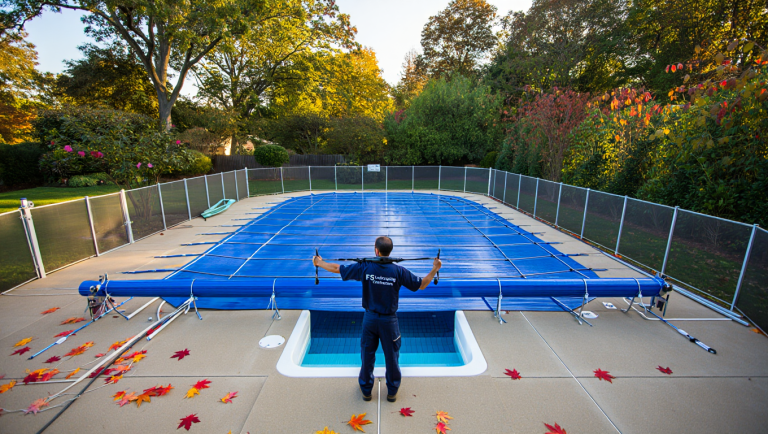
Winterization: The process of preparing a pool for cold-weather months by draining water to below the skimmer lines, adding antifreeze to plumbing, and covering the pool. Proper winterization is essential in Pennsylvania to prevent freeze damage.
Vinyl Liner Pool: A type of in-ground pool where a custom-fitted vinyl liner forms the water-holding surface over a structured frame. Liners typically last 10–15 years before needing replacement.
Conclusion: Making the Right Call on Pool Construction in Pennsylvania
Building a pool is a major decision, and Pennsylvania homeowners deserve to go into it with their eyes open. The best outcomes come from working with pool construction experts who are properly licensed, experienced with Pennsylvania’s regional conditions, transparent about costs, and committed to long-term quality.
Start by verifying HIC registration, read pool builder reviews carefully, collect at least three itemized quotes, and ask direct questions about winterization and warranty coverage. Whether you’re in the Pocono foothills, the Main Line, or the South Hills of Pittsburgh, the right pool builder is out there — and this guide gives you the framework to find them.
Ready to start your search? Contact our licensed team today and take the first step toward a backyard you’ll enjoy for decades.