
That nagging feeling. You walk out to your backyard oasis, coffee in hand, and something seems… off. Is the pool water lower than it was yesterday? You brush it off as evaporation, but the feeling lingers.
It’s not just in your head. A small, persistent pool leak is one of the most common—and most destructive—issues a homeowner can face. It’s more than just a water bill problem. That slow drip can silently undermine the beautiful hardscaping, patio, and landscaping you’ve invested in.
Welcome to your complete guide. We’re not just going to show you how to find a leak. We’re going to help you understand what it means for your entire backyard, especially for homeowners here in Pennsylvania. You will learn how to spot the signs, perform a simple test, and know exactly when you can fix common pool leaks yourself… and when it’s time to call a professional to protect your property.

Is Your Pool Leaking? The Telltale Signs
Before you can fix a leak, you have to be sure you have one. Some signs are obvious, but others are subtle.
Evaporation is normal, but a pool in Pennsylvania shouldn’t lose more than about a quarter-inch of water per day. If you’re constantly topping off the pool, you likely have a problem.
Look for these clues:
- Soggy Ground: Are there mushy spots in the lawn, even when it hasn’t rained? Pay close attention to the areas around the pool equipment and along the perimeter.
- Cracks in the Deck: This is a major red flag. New or expanding cracks in your concrete or paver patio can be a symptom of a leak (water washing away the soil underneath) or the cause of one (a shifting patio breaking a pipe).
- Stubborn Algae: If you’re fighting algae growth that just won’t quit, it could be a leak. New water is constantly being added, diluting your chemicals and throwing your water chemistry out of balance.
- Lifting or Sinking Pavers: That perfectly level patio suddenly has a new dip? Water erosion from a leak is a primary suspect.
- High Water or Utility Bills: An unexplained spike in your water bill is often the first sign homeowners notice.
Here in Pennsylvania, our freeze-thaw cycles are tough on outdoor structures. That’s why preventative pool maintenance and structural integrity are so important. A tiny issue in the fall can become a huge crack by spring.
The Bucket Test: Your First Line of Defense
Okay, you suspect a leak. Don’t panic. Let’s confirm it with the “bucket test.” This simple test helps you determine if your water loss is from a real leak or just evaporation.
It’s easy. Here’s how you do it.
- Place a Bucket: Get a standard 5-gallon plastic bucket. Place it on your pool’s second step, ensuring the bucket is partially submerged but not floating.
- Match the Water Level: Fill the bucket with pool water until the water level inside the bucket is the same as the water level outside the bucket (the pool water).
- Mark It: Use a piece of waterproof tape or a marker to mark the water level on both the inside and the outside of the bucket.
- Wait 24 Hours: Turn off the auto-fill valve and run your pool pump as you normally would. Let it sit for a full 24 hours.
- Check the Results: After 24 hours, compare the two marks.
- If both the inside and outside water levels have dropped by the same amount, you’re likely just seeing evaporation.
- If the pool’s water level (outside the bucket) has dropped more than the water level inside the bucket, you have a leak.
This test is your starting pistol. Now, the hunt begins.
Pinpointing the Problem: Where Is the Leak Coming From?
A pool is a complex system. A leak can come from three main areas: the structure, the plumbing, or the liner.
Structural Leaks (The Cracks)
These are leaks in the physical shell of the pool. In concrete or gunite pools, this means a crack in the plaster or shell. Look for visible cracks or areas where tile or plaster has fallen off.
A common structural weak point is the skimmer box—the plastic box where water enters the filter system. The connection between the plastic skimmer and the concrete pool shell can often separate, creating a leak.
Plumbing Leaks (The Hidden Enemy)
Your pool’s plumbing is a network of pipes running underground, connecting the skimmer and drains to the pump and filter (the “equipment pad”) and back to the return jets.
This is often the most damaging type of leak.
You might have a plumbing leak if:
- You see bubbles shooting from the return jets.
- Your pump is having a hard time priming or is sucking in air.
- You see drips or standing water around your pump, filter, or heater.
- You have significant soggy spots in the yard between the pool and the equipment pad.
Liner Leaks (The Tear)
If you have a vinyl-lined pool, the leak is most likely a small tear or puncture in the vinyl itself. These are common around fittings like stairs, lights, return jets, and skimmer plates.
You can find these using the dye test.
- Turn off the pump and let the water become still.
- Get a small, squeezable bottle of pool-safe dye (or even dark food coloring).
- Slowly approach an area you suspect is leaking (like a light fixture or a seam).
- Squeeze a small cloud of dye into the water right next to the suspected spot.
- If there is a leak, you will see the dye get sucked out of the pool through the hole.
How to Fix Common Pool Leaks: Your Action Plan
You’ve found the general area of the leak. What’s next? This is where you decide if this is a simple weekend fix or a job for a professional.
DIY Fixes for Minor Issues
For small, simple leaks, you can often handle the repair yourself.
- Small Vinyl Liner Tear: You can buy a vinyl patch kit (many even work underwater). Simply clean the area around the tear and apply the patch according to the instructions. This is a great temporary or even long-term fix for a small puncture.
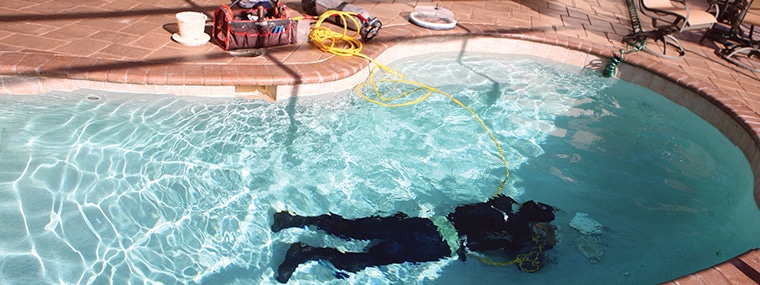
- Minor Skimmer Crack: For a hairline crack in the skimmer body or at the seam, pool putty (a two-part epoxy) can work wonders. You knead the putty, dive down, and press it firmly into the crack. It will cure underwater.
- Leaky Fitting at the Pump: If you see a drip at your equipment pad, it might just be a loose threaded connection. You can try tightening it (gently!) or applying a thread sealant.
When to Call a Professional (And Who to Call)
A DIY patch is a bandage. For anything else, you need a specialist. Trying to fix common pool leaks that are beyond your skill set can make the problem much, much worse.
This is the most important part of pool maintenance: knowing your limits.
You have two different professionals to consider.
1. Call a Pool Leak Detection Specialist when:
- You know you have a leak (from the bucket test) but cannot find it.
- You suspect the leak is in the underground plumbing.
- You have a large or complex tear in your vinyl liner.
- You have a major structural crack in the pool’s gunite shell.
These experts have sophisticated electronic and audio equipment to find the exact location of a subterranean leak, saving you from having to dig up your whole yard.
2. Call a Hardscaping & Landscaping Expert when:
This is the one most homeowners miss. A pool leak is often a symptom of a larger landscape and hardscape problem.
- You see cracks, sinking, or heaving in your pool patio, deck, or surrounding retaining walls.
- You have erosion or sinkholes developing in your yard near the pool.
- Your leak was caused by a shifting patio that cracked a pipe.
This is where our expertise at FS Landscaping Contractors comes in. A leak specialist may fix the pipe, but they don’t fix the damage to your patio. Your pool is part of an entire backyard system. If the foundation of your hardscaping is compromised, the problem will just happen again.
We assess and repair the underlying structural issues—the compacted base, the patio foundation, and the landscape drainage—that ensure your pool and patio are stable and secure for years to come.
Table: DIY vs. Professional Leak Repair
| Leak Type | DIY Fix (if minor) | When to Call a Pro |
| Small Vinyl Tear (<2 in) | Vinyl Patch Kit | Yes (if large, complex, or at a seam) |
| Small Shell Crack (<1/8 in) | Pool Putty | Yes (if structural, wide, or long) |
| Leaking Skimmer Body | Pool Putty | Yes (if the crack is large or returns) |
| Underground Plumbing | No | Immediately (Call a leak detection specialist) |
| Equipment Pad Drip | Tightening fittings | Yes (if it’s a cracked pump/filter) |
| Deck/Patio Cracks | N/A (Symptom) | Immediately (Call a hardscape expert to assess foundation) |
Prevention Is the Best Pool Maintenance
The best way to fix a leak, according to industry experts, is to never have one. Proactive pool maintenance, especially in Pennsylvania, is all about managing water and weather.
Proper Winterization for Pennsylvania Pools
This is non-negotiable. When you close your pool for the winter, all plumbing lines must be professionally blown out and plugged. Any water left in the pipes will freeze, expand, and crack the plumbing, guaranteeing a leak in the spring.
Maintain Your Hardscaping
Your patio isn’t just for looks; it’s a critical part of your pool’s drainage system. Ensure the patio and surrounding landscape are graded to slope away from the pool, so rainwater doesn’t oversaturate the soil near the pool’s shell. Regularly seal pavers and concrete to prevent water from seeping underneath.
Regular Equipment Checks
Once a week, just take a quick walk around your equipment pad. Look for drips, listen for strange noises (like the pump sucking air), and check that your O-rings on lids are properly lubricated.
The Hidden Cost of “Waiting It Out”
It’s tempting to ignore a “small” leak. What’s an extra inch of water a week?
A single drip, adding up to one inch of water loss in a standard pool, is over 500 gallons a week. That’s 2,000 gallons a month of wasted water and chemicals.
But the real cost is structural. That escaping water is a force of nature. It slowly, silently, washes away the compacted soil and base material that supports your heavy pool shell and concrete patio.
This erosion creates voids. First, your deck cracks. Then, it starts to sink or “settle” toward the pool. This settlement puts immense pressure on the pool’s plumbing and shell, cracking the very structure it was meant to protect.
What started as a $300 plumbing fix has now become a $20,000 patio and structural repair.

Protect Your Whole Backyard
A pool leak is never just a pool leak. It’s a threat to your entire backyard investment, from your water bill to the very foundation of your beautiful patio.
Spotting the signs early—checking that water level, looking for soggy ground, and running the bucket test—is the first step. Knowing when to apply a simple patch and when to call a professional is the second.
Don’t let a small drip turn into a landscape disaster. If you’re in Pennsylvania and see those warning signs—cracks in your patio, sinking pavers, or erosion around your pool—it’s time to call in the experts.
Contact FS Landscaping Contractors today. We can assess the structural integrity of your hardscaping, repair the damage, and ensure the foundation of your backyard oasis is as solid as the memories you make in it.