
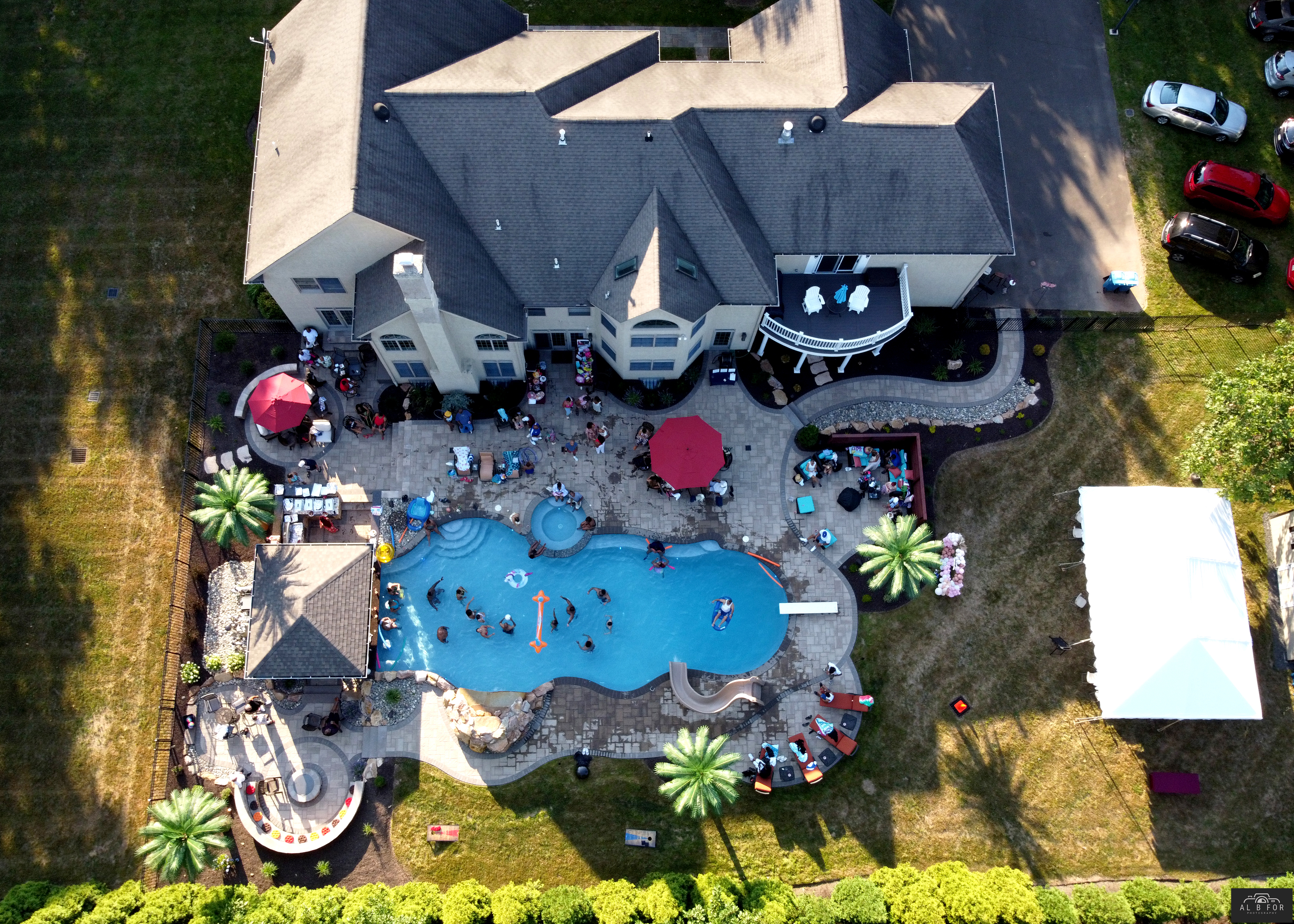
The plans are drawn, the excitement is building, and you can already picture those perfect Pennsylvania summer days by your new pool. It’s the centerpiece of your backyard oasis. But before the first drop of water goes in, there is one crucial element that is not just a good idea—it’s the law. We are talking about the pool fence.
For many homeowners, a fence can feel like an afterthought, a compliance hurdle to clear. But as pool and landscape builders here in Pennsylvania for over 25 years, we have seen firsthand how the right pool fence is the opposite: it is the single most important feature for protecting your family and the finishing touch that defines your entire space.
This article is your complete guide. We will walk through the non-negotiable safety laws in Pennsylvania you must follow, and then explore the exciting part—how to choose a style that enhances your backyard design.

Why Your Pool Fence is Your Most Important Pool Decision
A swimming pool brings incredible joy, but it also carries a profound responsibility. The primary goal of any pool project must be pool safety. Drowning is a silent and fast danger, and a physical barrier is the most effective, passive layer of protection you can install.
It is not just about peace of mind; it is a legal requirement. Pennsylvania state code, along with local municipal ordinances, mandates that any body of water—including in-ground pools, above-ground pools, and even inflatable pools capable of holding 24 inches of water or more—must be secured by a barrier.
Failing to install a compliant pool fence is not an option. It can result in failing your final inspection, potential fines, and, most importantly, a tragic accident. The goal is to build a beautiful space that is, above all, a safe space.
Understanding Pennsylvania’s Pool Fence Laws: The “Must-Haves”
Pennsylvania’s regulations are based on the International Swimming Pool & Spa Code (ISPSC) and are designed with one goal: to prevent small children from gaining unsupervised access to the pool area. While you should always check your local township’s specific rules, here are the non-negotiable minimums you need to know.
Fence Height and Clearance
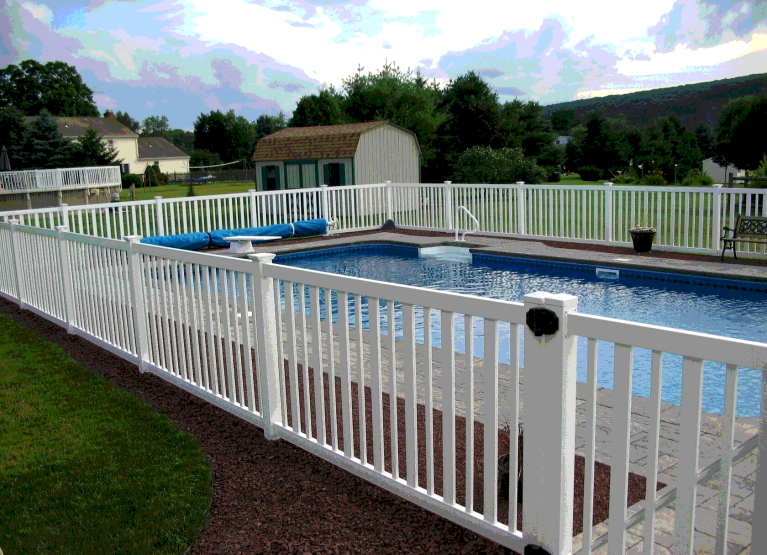
- Height: The top of your pool fence barrier must be at least 48 inches (4 feet) high, as measured from the ground on the outside of the fence. This height makes it difficult for a child to climb over.
- Ground Clearance: The space between the bottom of the fence and the ground cannot be more than 2 inches if you are installing over soft ground like grass or mulch. If you are installing over a solid surface like a concrete deck, that gap can be no more than 4
inches. This prevents a child from crawling underneath.
Climb and Opening Restrictions
The design of the fence itself is critical.
- Openings: Any gaps or openings in the fence (like between vertical pickets) must not allow a 4-inch-diameter sphere to pass through. This is the standard measurement for the approximate size of a small child’s head.
- Climb-ability: A fence must not provide “handholds or footholds” that create a ladder. If your fence has horizontal support rails, they must be at least 45 inches apart (measured vertically) to prevent a child from using them to climb. If the horizontal rails are on the inside (pool side) of the fence, the 45-inch rule is not required as the pickets on the outside are smooth.
The Gate: Your Most Important Component
Your gate is the only moving part of your fence, which makes it the most likely point of failure. Pennsylvania law is extremely specific here.
- Self-Closing: All pool gates must be equipped with a mechanism that makes them shut automatically from any open position.
- Self-Latching: The gate must also have a device that automatically latches it shut. You should not be able to just “swing” the gate closed without it locking.
- Latch Height: The release mechanism for the latch must be located at least 54 inches from the bottom of the gate. This puts it well out of reach of a small child.
- Swing Direction: Gates must open outward, away from the pool area. This is a critical safety feature. If a child pushes on the gate, they are pushing it into the locked frame, not swinging it open.
What if My House is Part of the Fence?
Many Pennsylvania homeowners use the wall of their house as one side of the pool barrier. This is allowed, but it comes with its own strict rule.
Any door from the house that grants direct access to the pool area must be equipped with an audible alarm. This alarm must sound within seven seconds after the door is opened and be loud enough to be heard throughout the house. The alarm must also have a deactivation switch (for adults to pass through) located at least 54 inches above the floor.
A Critical Note: Local Codes Matter Most
These state-level rules are the minimum. We work extensively in Bucks and Montgomery counties, and many local townships have rules that are even stricter. For example, some may require a 5-foot fence instead of a 4-foot one, or have specific rules about the fence’s distance from the pool’s edge.
Expert Tip: Always, always check with your local municipal ordinances before you finalize any fence design. As your builders, this is a standard part of our process to ensure your project passes inspection the first time.
Style Meets Safety: Choosing Your Pool Fence Material
Now for the fun part. A pool fence is a major visual element in your landscape. Your choice of material will define the look and feel of your entire backyard, and it needs to work with your home’s architecture and your landscaping.
Here is a breakdown of the most popular options we install.
Pool Fence Material Comparison
| Material | Pros | Cons | Best For… |
| Aluminum | Durable, low-maintenance, rust-proof. Classic, open “wrought-iron” look. Excellent visibility for pool safety. | Can be more expensive upfront than wood. Does not offer privacy. | Unobstructed views of the pool and landscape; classic, modern, or traditional homes. |
| Vinyl (PVC) | Total privacy options. Very low-maintenance, never needs painting. Many color options (white and tan are popular). | Can be damaged by high winds or impacts. Can feel less “high-end” than other materials. | Homeowners seeking total privacy and separation between the pool and the rest of the yard. |
| Wood | Natural, rustic aesthetic. Can be customized with different stains and styles. Often affordable. | High-maintenance (requires regular staining/sealing to prevent rot and warping). Can obstruct views. | Rustic, traditional, or farmhouse-style landscapes where the natural look is a priority. |
| Mesh | Excellent safety (very difficult to climb). Great visibility. Often removable for adult-only gatherings. | Less permanent or formal look. May not meet the aesthetic goals for a high-end landscape design. | Families with very young children where climb-ability is the absolute top concern. |
| Glass | Unmatched modern, high-end look. Total visibility and a wind barrier. | Extremely expensive. High-maintenance (requires constant cleaning to look good). Complex installation. | High-end, contemporary designs where the budget is substantial and the view is paramount. |
In our experience, black aluminum is the most popular choice for a pool fence in Pennsylvania. It tends to “disappear” visually, giving you a strong, code-compliant barrier without interrupting the view of your beautiful pool and landscaping.
Practical FAQs from Pennsylvania Homeowners
As builders, we get these questions all the time. Here are the answers you need to know.
When should I install the pool fence?
This is a critical project-planning question. The pool fence should be one of the very last things you install.
The pool construction process involves heavy machinery for excavation, concrete trucks, and teams laying the patio and deck. You do not want your brand-new fence to be in the way of that work, where it risks being scratched, dented, or damaged. The fence should go in after all hardscaping and major landscaping is complete, but before the pool is filled with water and final inspection.
Does my above-ground pool need a fence?
Yes. If it can hold 24 inches or more of water, it needs a barrier. However, if the walls of the above-ground pool are themselves at least 48 inches high, they can often serve as the barrier.
The key, in this case, is access. The ladder or steps used to enter the pool must be secured, locked, or removed to prevent access when the pool is not in use. Many locking, fold-up ladders are designed to meet this code requirement.
Can I install a pool fence myself?
While DIY-friendly fence kits are available, we strongly caution against it for a pool fence. The rules are complex, and the stakes are high.
An inspector will measure every detail: the height, the ground clearance, the picket spacing, the gate latch height, and the swing direction. If any one of these elements is wrong, you will fail your inspection, and your pool opening will be delayed.
Hiring a professional contractor (like FS Landscaping) who installs fences and pools every day ensures the job is done right. We know the local codes, we handle the permits, and we guarantee your barrier will pass inspection, giving you total peace of mind.

Your Safe and Stylish Oasis Awaits
A pool fence is not just an item on a checklist; it is the most important part of your pool project. It is the component that lets your family enjoy your new backyard oasis with confidence and peace of mind.
By understanding the non-negotiable pool safety laws of Pennsylvania and thoughtfully choosing a material that complements your home, you can create a space that is both stunning and secure. We’ve built our reputation on creating beautiful, functional, and, above all, safe outdoor living spaces for families just like yours.
Ready to design your dream backyard? From the pool to the patio to the perfect, compliant pool fence, our team is here to help. Contact FS Landscaping Contractors today for a consultation, and let’s build your safe oasis together.