Stamped Concrete Pool Decks: Slip Resistance, Finish Options, and Care
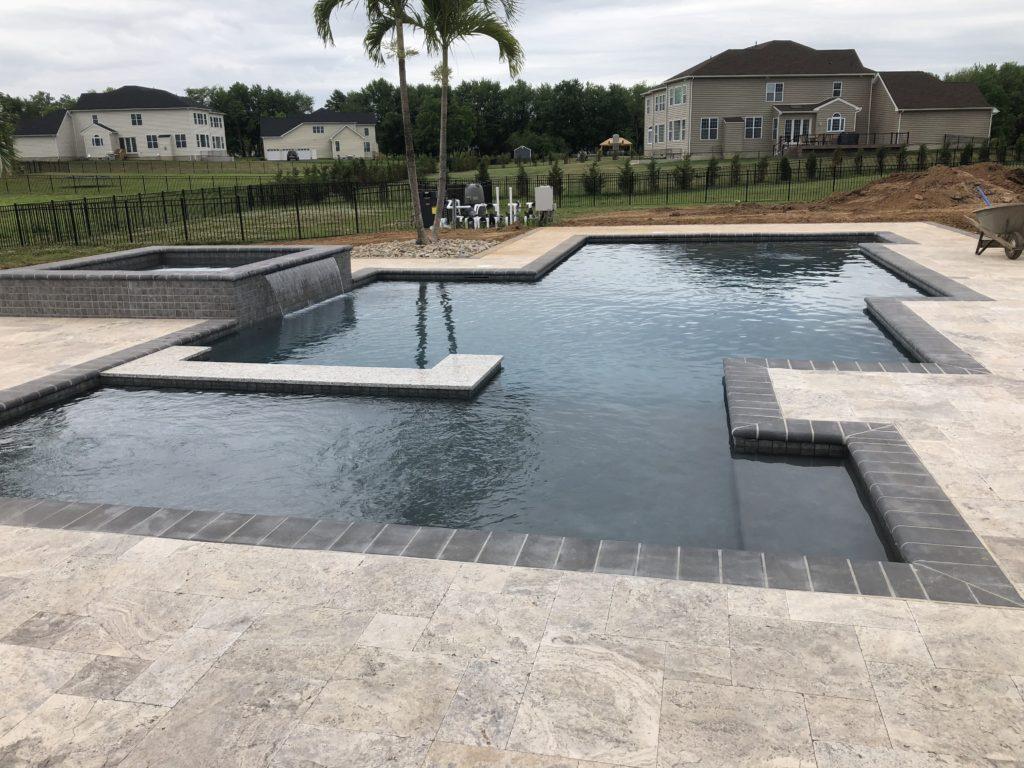
A stamped concrete pool deck has to do more than frame the water. It becomes a route between the house, pool, seating, equipment, and the rest of the yard. Its appearance matters, but planning how the surface will feel, drain, age, and connect to nearby features is just as important.
This guide focuses on those planning decisions. For a closer look at why any decorative concrete surface may feel slick under certain conditions, read our guide to whether stamped concrete is slippery. Here, the goal is to help you compare finishes and coordinate the whole pool area before work begins.
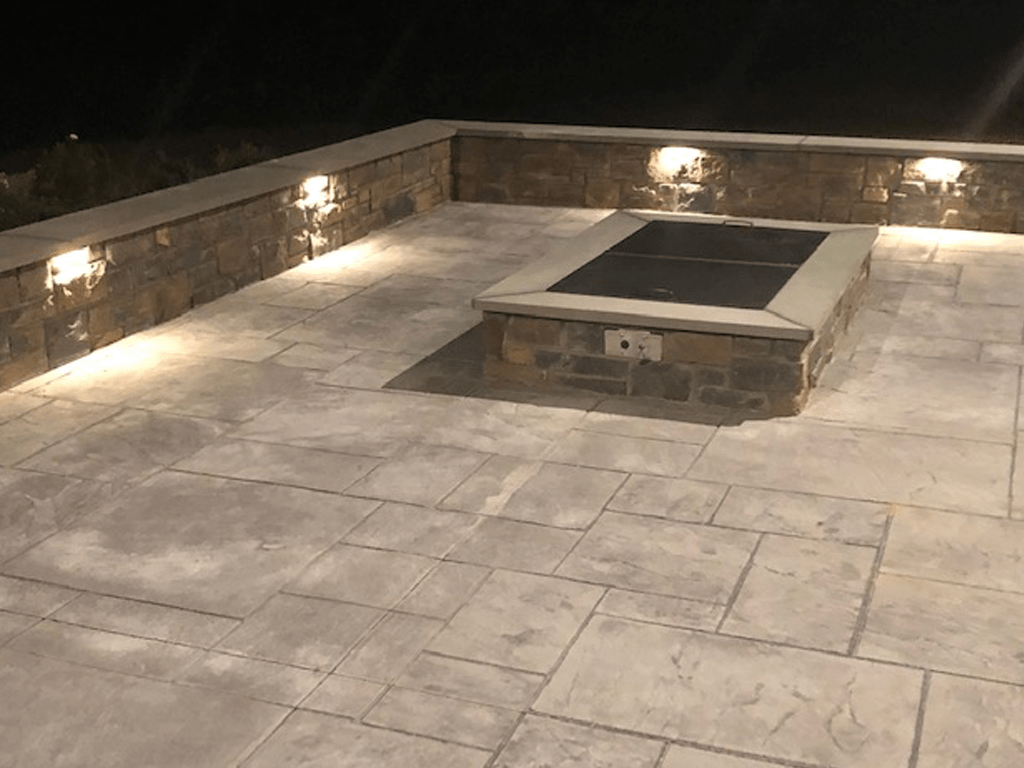
Start With How the Pool Deck Will Be Used
Before choosing a pattern or color, map the everyday movement around the pool. Think about where people will enter the area, where wet feet are most common, and where furniture, grills, planters, or storage may sit. A deck designed around those paths can be easier to navigate and maintain than one planned only as a border around the pool.
Make a simple list of the activities the space needs to support. It may include supervising swimmers, setting out lounge chairs, carrying food from the house, reaching pool equipment, or moving between the pool and another outdoor living area. This helps establish which zones need more room and where transitions deserve extra attention.
Plan for Traction Without Relying on a Slip-Proof Claim
No pool deck should be described as slip-proof. Water, sunscreen, leaves, dirt, algae, surface wear, and maintenance choices can all affect footing. The practical objective is to select an appropriate surface system and care routine for an area that will regularly get wet.
Discuss Texture Early
Stamped concrete can reproduce a range of visual textures, from restrained stone-inspired patterns to deeper impressions. More texture is not automatically better. A pronounced profile may affect how the deck feels under bare feet or how easily debris can be removed. A very smooth decorative finish may not be the right direction beside a pool. Ask to evaluate finish samples with both comfort and traction in mind.
Coordinate Sealer and Traction Additives
Sealer selection affects appearance and maintenance as well as surface feel. Gloss level, product compatibility, application, and the possible use of a traction additive should be discussed as one system. These decisions should not be treated as a last-minute cosmetic choice. Ask what care products are compatible with the planned finish and how future resealing should be handled.
Compare Finish Options as a Complete Palette
The pattern is only one part of a stamped concrete design. Base color, accent color, joint layout, border treatment, texture depth, and sealer appearance all contribute to the result. Review them together instead of approving each item in isolation.
Stone-inspired patterns can complement naturalistic landscapes, while more orderly patterns may suit structured patios and architecture. A contrasting border can define the pool edge or separate a walking route from a seating area. Subtle color variation can add depth, but the palette should still relate to the home exterior and nearby hardscape.
Physical samples are useful because colors and textures can look different under outdoor light than they do on a screen. View options in sun and shade if possible. Remember that the finished surface will also be seen next to water, coping, furniture, planting, and the house.
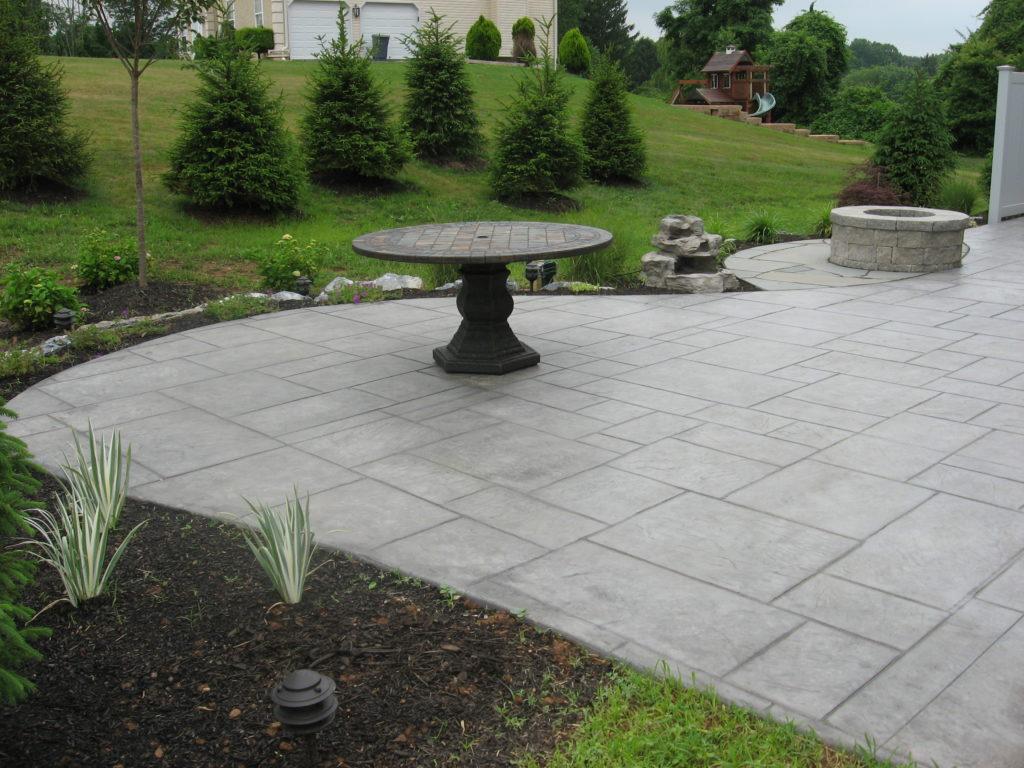
Make Drainage Part of the Design
A pool deck needs a deliberate drainage plan. Water should not be left to find its own route after the shape, elevations, and surrounding features have already been decided. The pool, deck, house, lawn, planting beds, and any drainage components need to be considered together.
- Surface direction: Discuss how water is intended to move across and away from occupied areas.
- Low spots: Review the layout for places where water or debris could collect.
- Transitions: Coordinate elevations where concrete meets coping, doors, steps, lawns, and other paving.
- Runoff destination: Confirm where runoff can go without creating a new problem elsewhere on the property.
- Drain access: Keep any channels, drains, or cleanout points accessible for routine care.
Drainage choices are site specific. Existing grades, soil conditions, structures, and other improvements can affect the plan. They should be evaluated as part of the overall design rather than copied from another property.
Coordinate the Deck With the Pool and Hardscape
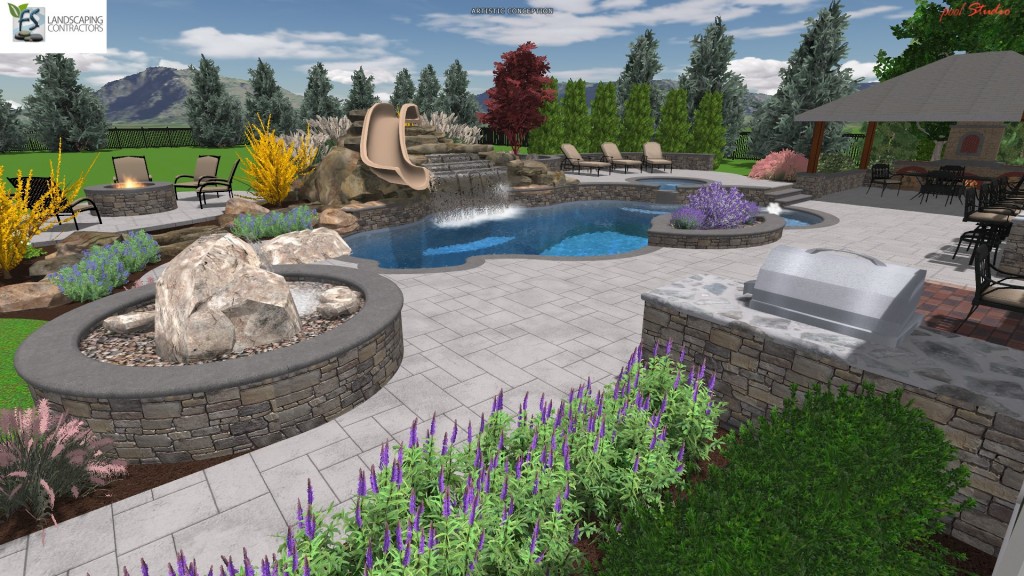
Pool decks rarely function as isolated slabs. They meet coping, steps, patios, walkways, retaining elements, planting beds, and mechanical areas. Coordinating these pieces can reduce awkward transitions and make the finished space feel intentional.
If the project includes a new pool, establish deck decisions alongside the pool layout. If the pool already exists, document fixed elevations, access points, equipment routes, and areas that must remain reachable. Broader hardscaping plans should also account for movement between the pool and the house, yard, or dining area.
Joint locations and pattern orientation deserve attention, too. Concrete joints serve a practical purpose, while stamp patterns create visual lines. Discussing both before placement can help them work together instead of appearing unrelated. Irregular edges, curves, drains, and narrow sections should be reviewed in the layout.
Build Care Into the Finish Decision
Maintenance begins with knowing what was installed. Keep a record of the sealer or other surface products used and follow the applicable product and contractor guidance. Avoid assuming that every concrete cleaner, ice-control product, or resealing product is suitable for the finish.
Routine Cleaning
Remove leaves, soil, and organic debris before they accumulate. Clean spills and residue with methods appropriate for the surface. Around a pool, pay attention to areas where water repeatedly splashes or where planters and furniture limit drying. Keeping drainage paths open is part of surface care.
Periodic Review
Inspect the deck for changes in appearance, worn areas, sealant condition, joint condition, drainage behavior, and places that remain damp. The right response depends on the cause and the products already present. Ask a qualified professional before applying a new coating or making a repair that could change the surface texture.
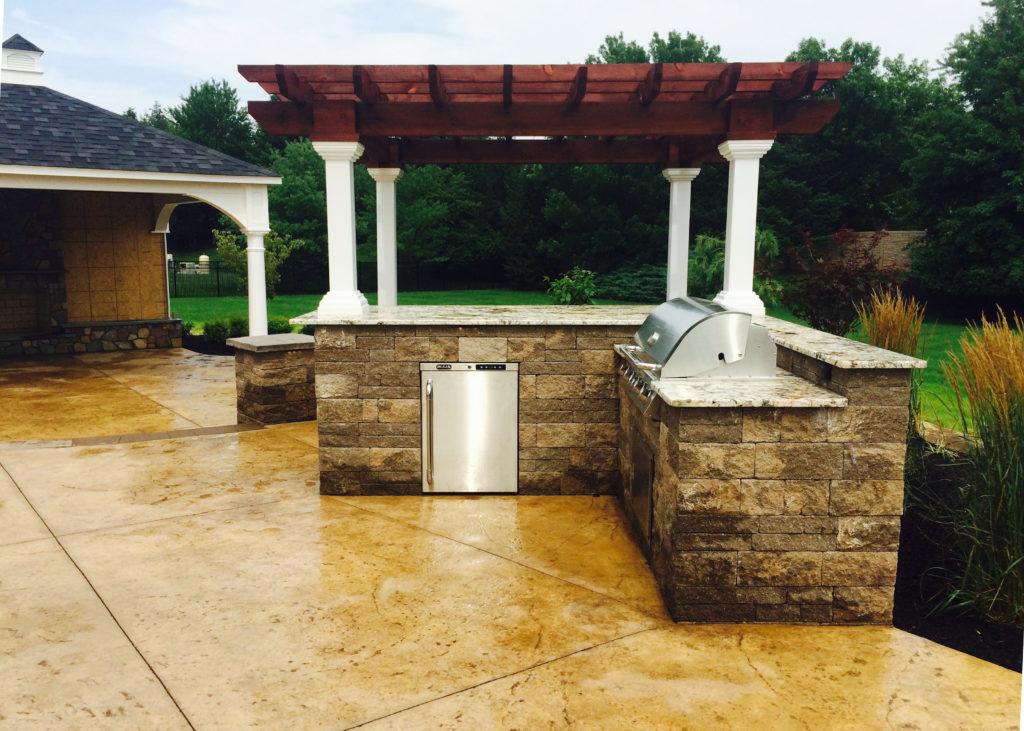
Use a Simple Planning Checklist
A coordinated conversation before installation can prevent important choices from being separated across different phases. Bring these questions to the design process:
- Which routes and activity zones need the most space?
- What texture balances bare-foot comfort, appearance, and wet-area traction?
- How will pattern, color, borders, joints, and sealer work together?
- Where is water intended to travel, and how will drainage points be maintained?
- How will the deck meet coping, steps, doors, lawns, and adjacent paving?
- Which product information should be kept for cleaning and future care?
- Who is coordinating the pool, concrete, landscape, and other outdoor features?
Verify Local Requirements Before Work Begins
Property conditions and local requirements can affect pool-area planning. Setbacks, barriers, drainage, utilities, easements, and approvals should not be assumed. The applicable requirements can vary by location and project scope, so verify them with the relevant local authorities and qualified project professionals before finalizing construction documents or starting work.
Plan the Pool Deck as Part of the Whole Backyard
FS Landscaping serves Bucks and Montgomery Counties with stamped concrete, pools, hardscaping, and outdoor living services. If you are comparing pool deck finishes or coordinating a larger backyard plan, contact FS Landscaping to discuss the space, priorities, and next steps.