Key Takeaways
- Pool installation services Pennsylvania include design, permits, excavation, plumbing, electrical, and finishing.
- Pennsylvania pool builders must understand freeze-thaw soil conditions unique to the region.
- Licensed pool builders in PA are required by law — always verify credentials before signing a contract.
- In-ground concrete pools are the best long-term option for Pennsylvania’s cold climate zones.
- Pool installation costs in PA vary based on size, depth, features, and site conditions.
- Winterization is not optional — proper closing procedures protect your investment every year.
- Many local pool contractors in PA offer financing options to make pool ownership more accessible.

Why Building a Pool in Pennsylvania Is Different
If you’re a Pennsylvania homeowner thinking about adding a pool, you already know the state doesn’t make it easy. Winters are cold, ground frost goes deep, and the soil conditions across the state vary enormously — from the rocky terrain of the Pocono Mountains to the clay-heavy ground in the Philadelphia suburbs.
That’s exactly why choosing the right Pennsylvania pool builders isn’t just a preference — it’s a necessity. A contractor who has only worked in warm-weather states may not understand what happens to concrete, plumbing, and structural components when temperatures drop below freezing repeatedly over a five-month winter. The wrong builder can mean cracked walls, shifted foundations, and costly repairs within just a few seasons.
This guide is written specifically for Pennsylvania homeowners who want to make smart, informed decisions about pool construction in a cold climate zone. You’ll learn how to evaluate contractors, understand what construction methods hold up in PA winters, ask the right questions before signing anything, and avoid the most common and expensive mistakes.
How to Choose Licensed Pool Builders in PA: A Step-by-Step Process
Finding the right contractor takes more than a Google search. Here’s a practical, sequential process for vetting pool contractors near you in PA.
Step 1: Verify licensing and insurance.
In Pennsylvania, pool contractors must hold a valid Home Improvement Contractor (HIC) registration through the Pennsylvania Attorney General’s Office. Ask for the registration number and verify via the PA Attorney General’s office before any further conversation.
Step 2: Check for local experience specifically in cold climate work.
Ask directly: “How many pools have you built in this county, and how do you handle freeze-thaw conditions?” A contractor who hesitates or gives a vague answer should raise a flag.
Step 3: Request references from past clients in your region.
Ask for three to five homeowners in similar geographic zones — not just the Philly suburbs if you’re in central PA. Soil and frost conditions vary by region.
Step 4: Review pool builder reviews in PA on multiple platforms.
Check Google reviews, the Better Business Bureau, and Houzz. Look for patterns in negative reviews — recurring complaints about scheduling, communication, or post-install problems are more telling than a single bad review. To help you spot issues early, review these common red flags in contractor reviews.
Step 5: Get at least three written bids.
Each bid should itemize materials, labor, permits, excavation, and projected timeline. Avoid any contractor who provides only a single lump-sum figure without detail.
Step 6: Confirm permit knowledge and acquisition.
Your contractor should pull all required permits from the local municipality. If they ask you to handle permitting, that’s a red flag.
Step 7: Review the warranty — for both workmanship and materials.
Cold climate construction carries higher structural risk. A reputable contractor will stand behind their work with a written warranty of at least one year on labor, and will use materials rated for freeze-thaw exposure.
What Type of Pool Holds Up Best in Pennsylvania Winters?
Not all pools are created equal when it comes to cold-climate durability. Here’s how the primary in-ground pool types compare for Pennsylvania conditions:
| Feature | Concrete/Gunite | Fiberglass | Vinyl Liner |
|---|---|---|---|
| Install Time | 8–14 Weeks | 3–6 Weeks | 4–8 Weeks |
| Cost Range (PA) | $80,000 – $150,000+ | $60,000 – $90,000 | $50,000 – $80,000 |
| Customization | Very High | Limited | Moderate |
| Durability | 25–50+ Years | 20–30 Years | 10–15 Years (Liner) |
| Maintenance | Moderate | Low | Low/Moderate |
| Pennsylvania Suitability | Excellent | Not Recommended | Moderate |
Concrete pools — specifically gunite or shotcrete construction — are the industry standard for cold climate zones. The material can be engineered to flex slightly with ground movement, and when built correctly with proper drainage and reinforcement, they hold up through decades of Pennsylvania winters. If you are considering this route, learn more about what to expect with gunite pool costs.
Vinyl liner pools are a more budget-friendly entry point, but homeowners should understand that liners typically need replacement every 10–15 years, and liner integrity can be compromised by sharp freeze-thaw cycles if the pool is not properly winterized.
Cold Climate Construction: What Best-Rated Pool Builders in PA Do Differently
The difference between a great cold-climate pool builder and an average one comes down to engineering details most homeowners never see. Here’s what separates the best-rated pool builders in PA from the rest:
Frost Line Awareness
The frost line in Pennsylvania ranges from approximately 30 to 48 inches depending on the region, according to data published by the Pennsylvania Department of Agriculture and referenced by the American Society of Civil Engineers. Experienced in-ground pool companies in PA account for this when setting footings, designing plumbing runs, and engineering the pool shell. For technical specifics, refer to the International Residential Code frost protection standards. If your plumbing isn’t below the frost line, you’re looking at cracked pipes.
Proper Backfill and Drainage Engineering
Water that pools around a concrete shell during freeze-thaw cycles creates hydrostatic pressure — one of the leading causes of structural cracking. Skilled local pool construction experts use engineered backfill material and drainage systems to manage this pressure year-round.
Winterization-Ready Plumbing Design
Top contractors in PA design their plumbing systems to be blown out cleanly. That means proper loop configurations, strategically placed drains, and fittings that don’t trap water. This isn’t an afterthought — it’s built into the original design. Following industry-standard winterization guidelines ensures your system remains intact through harsh freezes.
Climate-Appropriate Equipment Selection
Pumps, heaters, and filtration systems must be rated for seasonal operation in cold climates. A pool left with the wrong equipment can sustain thousands of dollars in damage from a single hard freeze. When selecting hardware, consult our guide on choosing the right pump and filter system for cold-weather reliability.
Pros and Cons of Building a Pool in Pennsylvania
| Pros | Cons |
|---|---|
| Increases property value in desirable markets (Philly suburbs, Pittsburgh areas) | Higher construction costs due to frost-line engineering requirements |
| Provides a multi-season recreational space (May–October with heating) | Shorter swimming season without a heater (approx. 4–5 months) |
| Natural maintenance rhythm aligned with PA’s defined seasons | Annual winterization and spring opening add ongoing costs |
| Well-established local installation services across the state | Rocky terrain or clay soil can significantly increase excavation costs |
| Customizable designs that enhance outdoor living spaces | Potential for higher insurance premiums in some municipalities |
Do’s and Don’ts When Hiring Pool Contractors in PA
| DO | DON’T |
|---|---|
| Ask specifically about cold-climate construction experience | Hire based on price alone — lowest bids often reflect engineering shortcuts |
| Require a written, itemized contract before work begins | Allow work to begin without a signed contract in hand |
| Verify that all permits are pulled before excavation starts | Skip the reference check, even for highly rated contractors |
| Ask about financing options upfront if budget is a concern | Assume your builder will handle permits — confirm it explicitly in writing |
| Request a winterization plan as part of the original project scope | Accept verbal warranties — everything must be documented |
Understanding Pool Installation Costs in PA
Pool pricing in Pennsylvania is influenced by multiple factors. Industry professionals and organizations such as the Pool & Hot Tub Alliance (PHTA) note that regional cost variation can be significant even within a single state.
Factors that affect pricing in Pennsylvania:
- Site conditions: Rocky soil in areas like the Poconos or Lehigh Valley significantly increases excavation costs compared to softer suburban ground.
- Pool size and depth: A standard 16×32 in-ground pool costs considerably more than a smaller plunge pool.
- Coping and decking: Stamped concrete, travertine, or natural stone adds cost but also durability in freeze-thaw conditions.
- Equipment package: Variable-speed pumps, LED lighting, heaters, and automation systems are all additive costs.
- Permit and inspection fees: These vary by municipality and are non-negotiable.
Case Study :
A homeowner in Bucks County, PA wanted a 16×34 gunite pool with a water feature, in-floor cleaning system, and gas heater. Three bids ranged from $85,000 to $115,000. The winning bid came in at $98,000 from a contractor with 20 years of local experience, solid reviews, and a detailed winterization clause in the contract. The lowest bidder was ultimately disqualified after the homeowner discovered they lacked a current HIC registration. For more context, see real-world pool costs in Bucks County.
This illustrates a critical point: if you need the most durable long-term result, choose the contractor with documented local experience, not the lowest number.
Pool Builder Financing Options in Pennsylvania
Many residential pool contractors in PA offer financing either directly or through third-party lenders. Common options include:
- Home equity loans or HELOCs: Often the lowest interest rate option for homeowners with equity
- Personal loans: Faster approval, no collateral required, but typically higher rates
- Contractor-arranged financing: Some pool installation services in PA partner with lending companies like HFS Financial or Lyon Financial, which specialize in pool loans
- FHA Title I loans: A government-backed option for home improvement financing
If you need a flexible payment structure, ask each contractor upfront which financing partners they work with. You can also explore our recommended financing options to find a plan that fits your budget. Some contractors offer promotional periods or deferred interest programs that can make a significant difference in monthly cash flow.
Quick Answers — FAQ
Q: Do Pennsylvania pool builders need a special license?
A: Yes. All pool contractors in PA are required to hold a Home Improvement Contractor (HIC) registration through the Pennsylvania Office of the Attorney General. Always verify the registration number before signing any contract.
Q: How deep should a pool be buried in Pennsylvania to avoid freeze damage?
A: All plumbing lines should run below the frost line, which in Pennsylvania ranges from 30 to 48 inches depending on location. The pool shell itself is engineered to handle the surrounding ground pressure, but drainage and plumbing depth are critical design factors.
Q: How long is the pool season in Pennsylvania?
A: Without heating, most Pennsylvania homeowners enjoy their pools from late May through mid-September — roughly four months. With a gas or heat pump heater, the season can extend to five or even six months.
Q: What is the best type of in-ground pool for PA winters?
A: Concrete (gunite or shotcrete) pools are widely considered the most durable option for Pennsylvania’s climate. They can be engineered to handle freeze-thaw soil movement and have the longest lifespan of any in-ground pool type.
Q: Can I get pool builder financing in PA?
A: Yes. Many local pool contractors in PA work with financing partners, and homeowners can also use home equity loans, personal loans, or government-backed home improvement financing. Ask during the bidding process.
Q: How much does pool winterization cost in Pennsylvania?
A: Professional winterization typically ranges from $200 to $600 depending on pool size, equipment, and location. This cost should be factored into the annual budget for pool ownership.
Q: How do I check pool builder reviews in PA?
A: Check Google Business profiles, the Better Business Bureau (BBB), Houzz, and HomeAdvisor. The Pennsylvania Office of the Attorney General also maintains a contractor complaint database you can search by business name.
Q: Are above-ground or fiberglass pools a good option in Pennsylvania?
A: We do not recommend or install above-ground or fiberglass pools. For Pennsylvania’s climate, concrete in-ground pools offer the best durability, longevity, and long-term value.
Q: How long does pool construction take in Pennsylvania?
A: A standard in-ground concrete pool typically takes 8 to 14 weeks from permit approval to completion, depending on weather, site conditions, and contractor workload. Spring and early summer slots book quickly — plan ahead. See our guide on typical project timelines explained.
Q: What permits are required to build a pool in Pennsylvania?
A: Requirements vary by municipality, but most jurisdictions require a building permit, zoning approval, and an electrical permit. Your contractor should handle all permit applications as part of the project.
Glossary of Terms
Gunite: A dry-mix concrete applied pneumatically through a hose and nozzle to form the shell of a swimming pool. It is the most common material used in cold-climate in-ground pool construction because of its strength and flexibility.
Frost Line: The maximum depth at which groundwater in the soil is expected to freeze. In Pennsylvania, the frost line ranges from 30 to 48 inches and directly determines how deep pool plumbing must be installed to prevent freeze damage.
Hydrostatic Pressure: The pressure exerted by water in and around soil on a pool shell. During freeze-thaw cycles, poor drainage can allow hydrostatic pressure to build and cause structural cracking if not addressed in the original pool design.
Winterization: The process of closing a pool for the winter season, which includes blowing out plumbing lines, adding winterizing chemicals, lowering the water level, and covering the pool. Proper winterization is essential in Pennsylvania to prevent freeze damage.
Conclusion
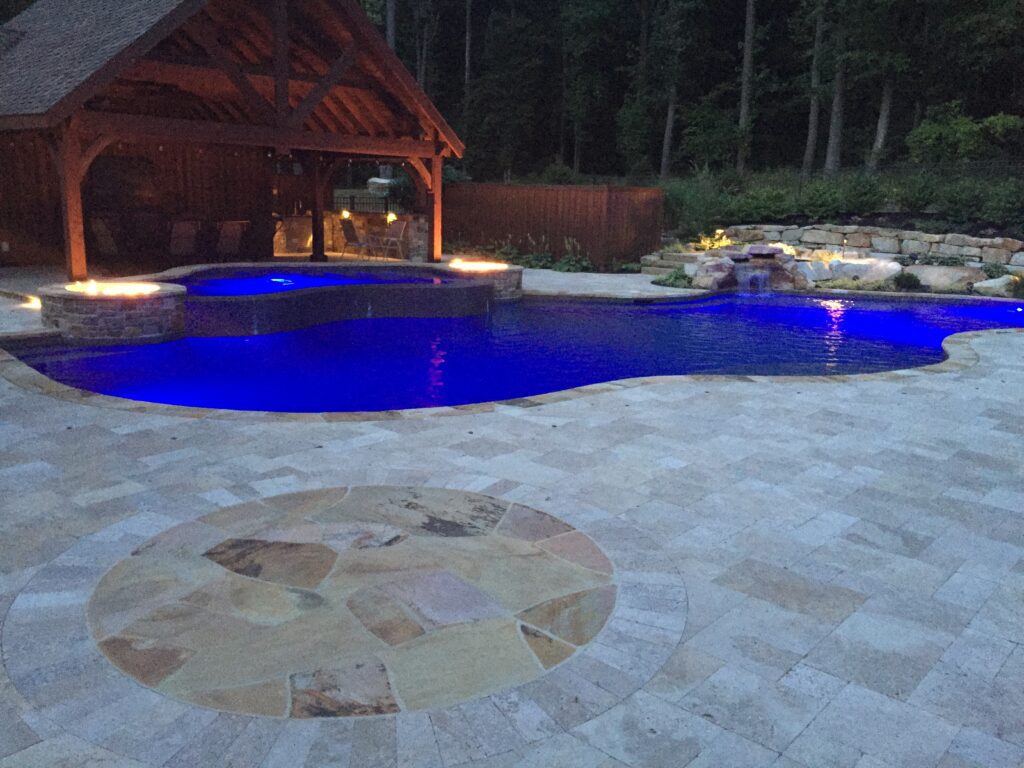
Building a pool in Pennsylvania is a serious investment — and in a cold climate state, the contractor you choose matters more than almost any other decision in the process. Pennsylvania pool builders who understand frost lines, freeze-thaw engineering, and proper winterization techniques will deliver a pool that holds up for decades. Those who don’t can leave you with structural repairs, cracked plumbing, and a pool that loses value faster than it gains it.
The path to a successful pool project is straightforward: verify licensing, check references, compare detailed bids, confirm cold-climate construction experience, and put everything in writing. If you follow that process, you’re already ahead of the majority of pool buyers in the state.
Ready to move forward? Request your free site assessment today to get a detailed quote from our licensed pool construction experts. We specialize in cold-climate in-ground pool design and build every project to last through Pennsylvania’s harshest winters.